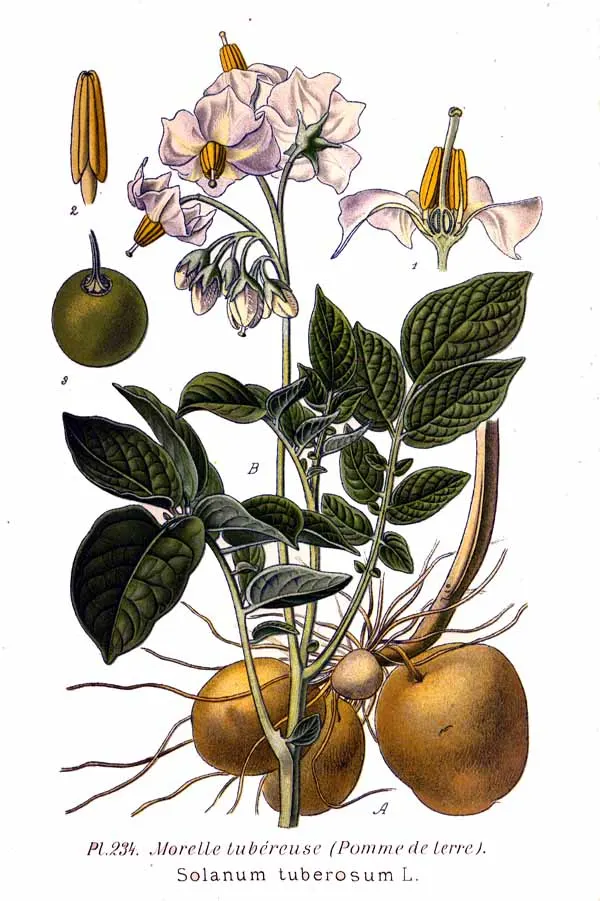
Photo: Amédée Masclef, Public domain (via Wikimedia Commons)
Potato
Solanum tuberosum
Also known as Irish potato, White potato, Spud
Key benefits
✦Traditional uses
✦Long before the potato reached Europe, Andean farmers had already been cultivating it for thousands of years, high in the mountains where little else would grow, and had learned to freeze-dry it into chuño so it would keep through hard winters. When it crossed the Atlantic in the sixteenth century, it slowly won over skeptical cooks and became one of the most important food crops in the world, feeding entire nations and, in Ireland's case, becoming so deeply relied upon that its failure brought famine. Alongside its place at the table, cooks and grandmothers have long reached for a cool, freshly cut potato as a gentle, everyday remedy for tired eyes, minor burns, and sun-warmed skin.
How to grow & use it
✦The full apothecary for Potato
Traditional remedies and step-by-step preparations, a complete growing guide, and how to harvest, dry, and store it, all unlocked with HerbLens Unlimited.
- ✦Remedies & preparations
- ✦ Growing guide
- ✦Harvest & storage
From under $6 a month. Free plant identifications always included.
- ✦Cucumber
- ✦Chamomile
- ✦Oatmeal
- ✦Cucumber slices
- ✦Aloe vera
“When the harvest calls for something humble, hearty, and endlessly nourishing.”
In 1995, the potato became the first vegetable ever grown in space, when NASA and the University of Wisconsin sent potato plant tissue aboard the Space Shuttle Columbia to test whether astronauts might one day grow their own food on long missions.
Potato tubers are safe once ripened, stored in the dark, and cooked. The leaves, stems, any green berries, and green or sprouted patches on the tuber contain solanine and can cause nausea, cramping, or worse if eaten; cut away green or sprouted parts before cooking, and never let livestock graze on the vines.