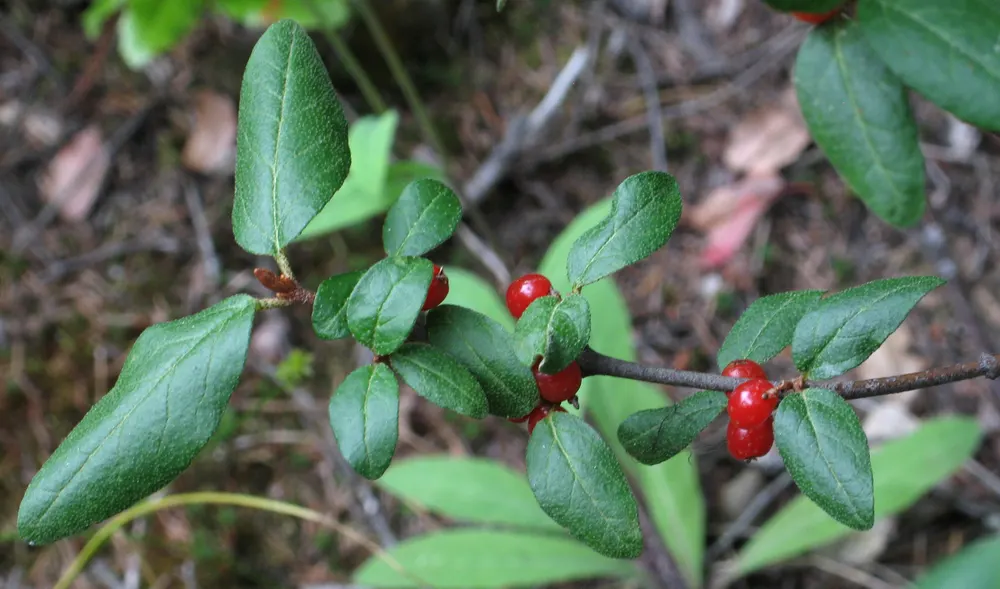
Photo: Robert Flogaus-Faust, CC BY 4.0 (via Wikimedia Commons)
Canadian Buffaloberry
Shepherdia canadensis
Also known as Soopolallie, Soapberry, Russet Buffaloberry, Foamberry, Canada Buffaloberry
Key benefits
✦Traditional uses
✦Canadian buffaloberry has long been gathered by Indigenous peoples across the northern and western reaches of North America, from the Interior Salish to the Blackfoot and Cree, who prized its tart red berries as both food and medicine. The berries were traditionally whipped by hand into a frothy pink dessert known as soopolallie or Indian ice cream, a treat reserved for feasts, gatherings, and special occasions. Beyond the berries, a tea made from the bark or twigs was traditionally taken to settle the stomach, stir a flagging appetite, and ease coughs and colds through the long winter months. Because the plant is a nitrogen-fixer that thrives in poor soil, it also earned a quiet reputation among foragers and gardeners as a hardy, generous neighbor to more delicate plants.
How to grow & use it
✦The full apothecary for Canadian Buffaloberry
Traditional remedies and step-by-step preparations, a complete growing guide, and how to harvest, dry, and store it, all unlocked with HerbLens Unlimited.
- ✦Remedies & preparations
- ✦ Growing guide
- ✦Harvest & storage
From under $6 a month. Free plant identifications always included.
- ✦Wild mint
- ✦Rose hips
- ✦Juniper berries
- ✦Sea buckthorn (Hippophae rhamnoides)
- ✦Oregon grape root
“For a taste of the northern wild, a berry that turns to foam under your hands and carries generations of harvest tradition.”
The foam in soopolallie comes from natural saponins in the berries, the same soap-like compounds that give the shrub its nickname, and some Indigenous communities used a special carved wooden whisk just for whipping it into stiff, rose-colored peaks at feasts and potlatches.
Canadian buffaloberry's raw berries contain natural saponins, and eating a large quantity can cause nausea, cramping, or a laxative effect, so they're traditionally diluted or sweetened before eating. Bark and twig preparations are stronger and best used cautiously, especially during pregnancy or nursing.