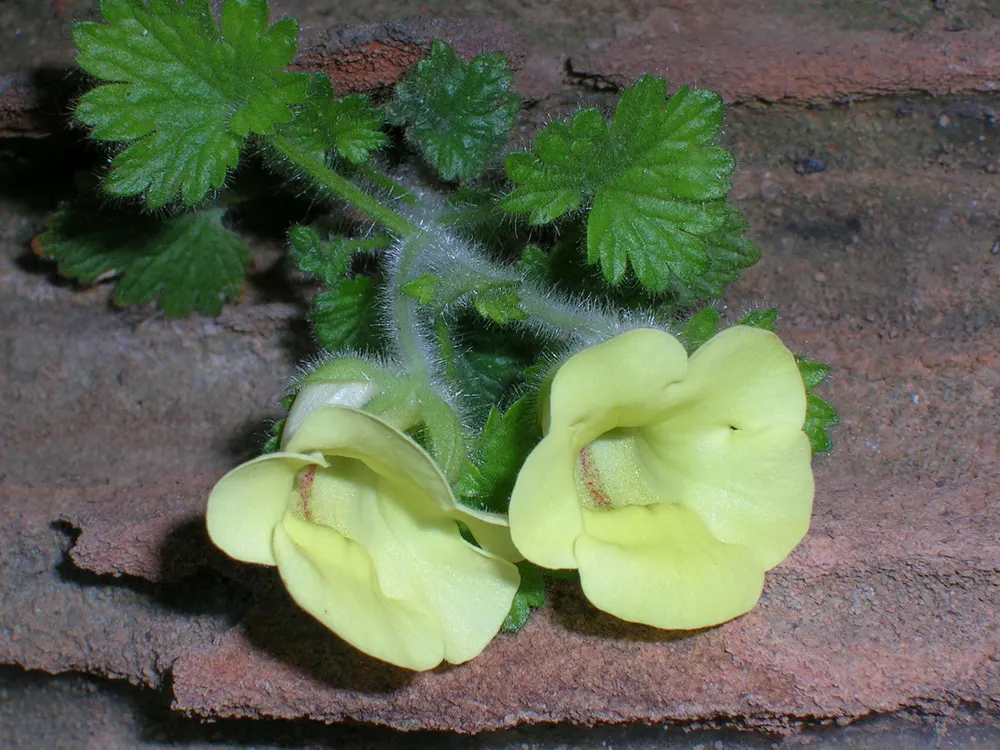
Photo: (c) Nick Helme, some rights reserved (CC BY-SA), CC BY-SA 4.0 (via Wikimedia Commons)
Cape Snapdragon
Colpias mollis
Also known as Soft Colpias
Key benefits
✦Traditional uses
✦Colpias mollis carries no known record of traditional medicinal or culinary use, in either indigenous Khoisan plant lore or later Cape herbal traditions, so we tell its story honestly as a botanist's plant rather than a healer's. Its real history lives in the fynbos itself, a small, soft leaved shrublet tucked into sandstone crevices of the Cederberg, quietly doing the work of holding soil, feeding pollinators, and surviving a demanding mountain climate. Gardeners who grow it today are drawn to its gentle, downy leaves (mollis means soft in Latin) and its cheerful yellow, snapdragon like flowers, a small piece of a wild and little visited corner of South Africa brought home to a sunny bed.
How to grow & use it
✦The full apothecary for Cape Snapdragon
Traditional remedies and step-by-step preparations, a complete growing guide, and how to harvest, dry, and store it, all unlocked with HerbLens Unlimited.
- ✦Remedies & preparations
- ✦ Growing guide
- ✦Harvest & storage
From under $6 a month. Free plant identifications always included.
- ✦Diascia
- ✦Nemesia
- ✦Diascia (as a similar trailing, snapdragon flowered companion in fynbos style plantings)
“For the gardener who wants a wild, soft edged corner of the Cape fynbos tucked into their own sunny, well drained bed.”
Colpias is a monotypic genus, meaning Colpias mollis is the only species in it, and botanists place it as a close cousin of the popular garden twinspurs (Diascia) and nemesias, all part of the same small South African plant tribe.
There's no known history of Colpias mollis as a food or medicine, and no reliable safety data exists. Treat it as an ornamental only, not something to eat or brew.