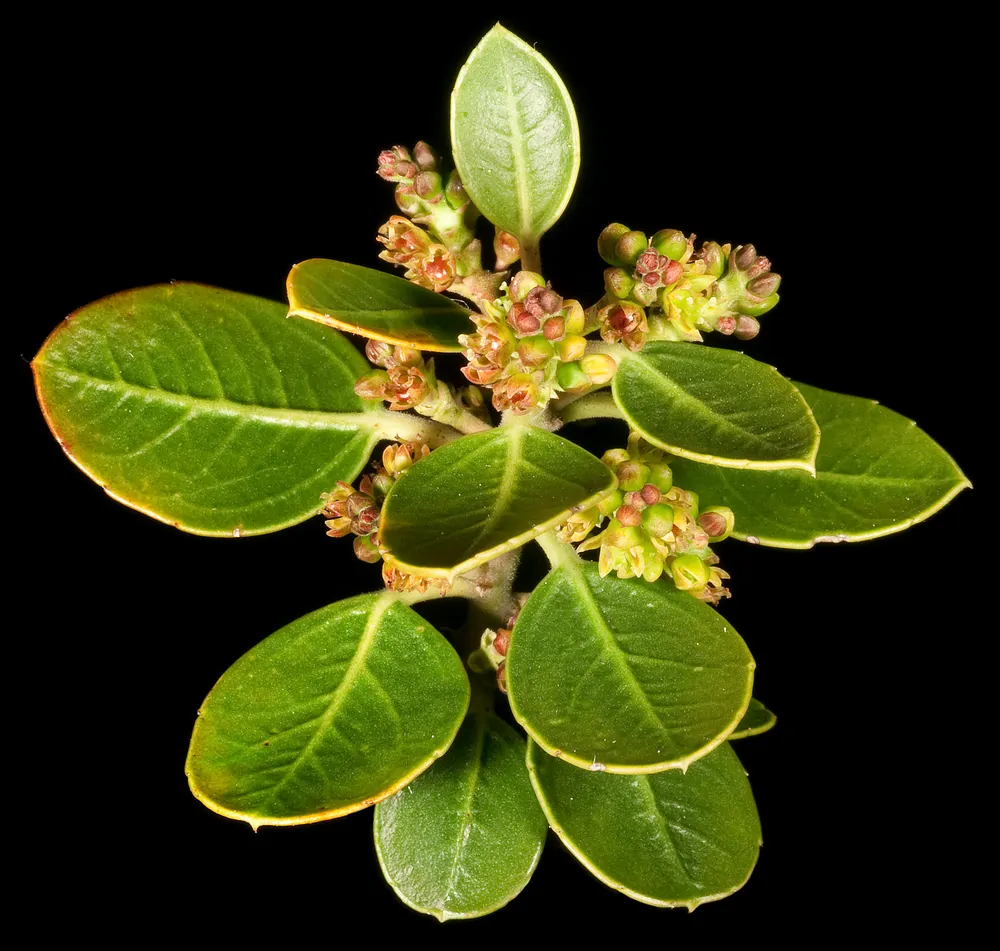
Photo: Kevin Thiele from Perth, Australia, CC BY 2.0 (via Wikimedia Commons)
Italian Buckthorn
Rhamnus alaternus
Also known as Mediterranean Buckthorn, Evergreen Buckthorn, Alaternus, Italian Buckthorn
Key benefits
✦Traditional uses
✦Italian buckthorn is a plant valued far more for its garden and craft uses than for anything taken internally. Along the Mediterranean coast it has long been planted as a windbreak and hedge because it shrugs off salt spray, drought, and neglect while staying glossy and green through winter. Its bark and unripe berries were part of an old Mediterranean dyer's toolkit, boiled down to yield yellows and greens used in cloth dyeing and, in some traditions, in pigments for paint and manuscript work. Its late winter flowers, small and easy to miss, quietly matter a great deal to early foraging bees when little else is blooming.
How to grow & use it
✦The full apothecary for Italian Buckthorn
Traditional remedies and step-by-step preparations, a complete growing guide, and how to harvest, dry, and store it, all unlocked with HerbLens Unlimited.
- ✦Remedies & preparations
- ✦ Growing guide
- ✦Harvest & storage
From under $6 a month. Free plant identifications always included.
- ✦Rosemary
- ✦Lavender
- ✦Myrtle
- ✦Viburnum tinus
- ✦Pittosporum tobira
“The shrub that stays green through every gray month and feeds the first bees of the year before anything else has bothered to bloom.”
The unripe berries of buckthorns like this one were once prized by dyers and painters precisely because their color was a moving target: green fruit gave a yellow dye, half-ripe fruit gave a true green, and fully ripened, blackened berries gave a deep purple. A single shrub could supply a small rainbow depending on the week it was picked.
Italian buckthorn is not a food or home-remedy herb. Like other plants in the buckthorn genus, its bark and berries contain anthraquinone-type compounds that act as harsh intestinal irritants, and eating the berries, especially while still unripe, has caused vomiting, cramping, and diarrhea in people, children, and pets. No part of this plant should be eaten, brewed, or taken internally in any form. It is also classed as an invasive or weedy species in parts of coastal California and Australia, so check local guidance before planting it in those regions. If a child or animal has eaten the berries, or if you have questions about this plant, contact a doctor, veterinarian, poison control, or a qualified professional right away rather than treating it at home.