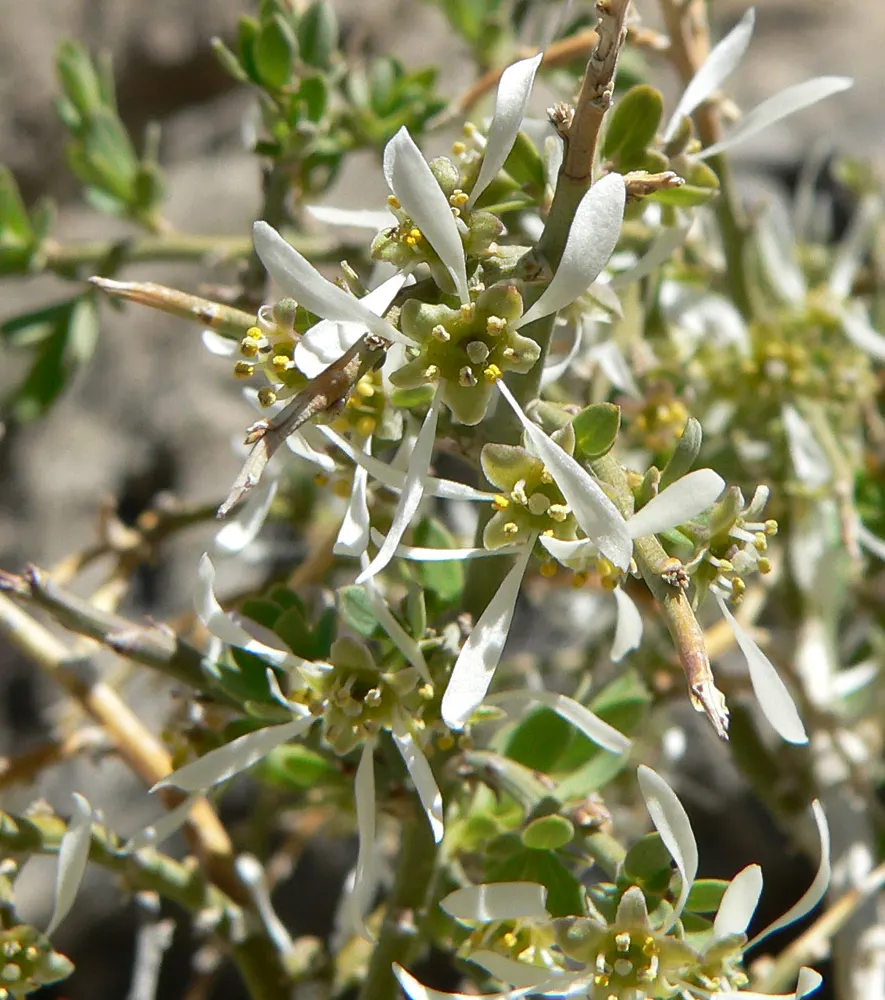
Photo: Stan Shebs, CC BY-SA 3.0 (via Wikimedia Commons)
Spiny Greasebush
Glossopetalon spinescens
Also known as Greasebush, Spiny-greasebush, Spinescent Greasebush, Cliffbush, Forsellesia spinescens
Key benefits
✦Traditional uses
✦Glossopetalon spinescens does not carry a documented history of herbal, medicinal, or culinary use, so this entry focuses on its true and considerable value: it is a tenacious little survivor of some of the harshest, rockiest ground in the American West. Botanists have long admired it as a relic of an ancient, small plant family with few living relatives, clinging to limestone cliffs and desert canyon walls where almost nothing else takes root. For desert bighorn sheep, mule deer, and other browsers, its evergreen, spine-guarded twigs are an important source of food in lean seasons, especially where forage is scarce. Its greatest traditional value has been ecological rather than medicinal, holding thin desert soils in place on slopes that would otherwise wash away.
How to grow & use it
✦The full apothecary for Spiny Greasebush
Traditional remedies and step-by-step preparations, a complete growing guide, and how to harvest, dry, and store it, all unlocked with HerbLens Unlimited.
- ✦Remedies & preparations
- ✦ Growing guide
- ✦Harvest & storage
From under $6 a month. Free plant identifications always included.
- ✦Antelope bitterbrush
- ✦Mormon tea (Ephedra)
- ✦Blackbrush
- ✦Bitterbrush (Purshia)
- ✦Blackbrush (Coleogyne ramosissima)
“For the wild, thorny beauty of a bare desert slope, where a plant this tough is the difference between bare rock and a living hillside.”
The genus name Glossopetalon comes from the Greek glossa, meaning tongue, and petalon, meaning petal, a nod to the narrow, tongue-shaped petals of its tiny flowers, best appreciated with a hand lens on a spring hike through limestone canyon country.
Spiny Greasebush has no history of food or medicinal use and no safety data, so it shouldn't be eaten or brewed as tea. It's valued as a garden and native landscape plant instead.