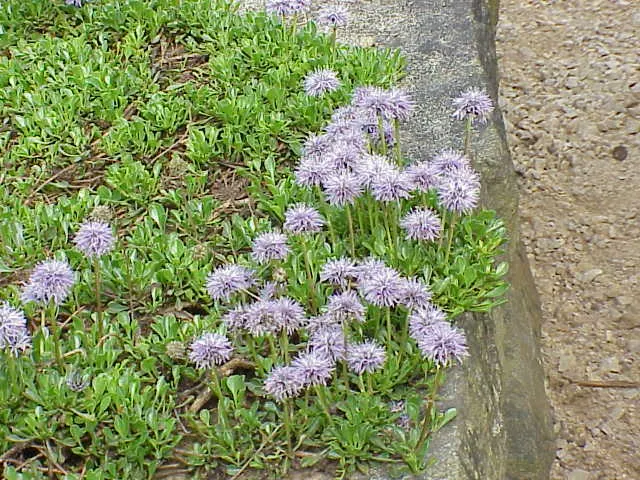
Photo: Kurt Stüber [1], CC BY-SA 3.0 (via Wikimedia Commons)
Heart-leaved Globe Daisy
Globularia cordifolia
Also known as Heart-leaved Globularia, Matted Globularia, Creeping Globe Daisy
Key benefits
✦Traditional uses
✦Long before it reached alpine nurseries and rock gardens further afield, Heart-leaved Globe Daisy simply belonged to the high, stony ground of the European mountains, tucking itself into limestone cracks where almost nothing else could get a foothold. Mountain shepherds and botanists who wandered those scree slopes came to know it as one of the first cheerful blooms to appear after snowmelt, its little blue globes scattered across gray rock like scattered beads. Gardeners eventually carried it down from the peaks into troughs and rockeries, prizing it purely for its toughness and its color rather than for any kitchen or medicine chest use. Its cousin species in warmer Mediterranean country, particularly Globularia alypum, did carry a folk reputation as a purgative herb, but that tradition was never really extended to this smaller, high-altitude relative.
How to grow & use it
✦The full apothecary for Heart-leaved Globe Daisy
Traditional remedies and step-by-step preparations, a complete growing guide, and how to harvest, dry, and store it, all unlocked with HerbLens Unlimited.
- ✦Remedies & preparations
- ✦ Growing guide
- ✦Harvest & storage
From under $6 a month. Free plant identifications always included.
- ✦Creeping thyme
- ✦Houseleek (Sempervivum)
- ✦Saxifrage
- ✦Moss phlox (Phlox subulata)
- ✦Creeping Globularia (Globularia repens)
“For the bare, sun-baked corner of the rock garden where nothing else will hold on, and you want a blue haze of bloom against gray stone.”
The genus name Globularia comes from the Latin globulus, meaning little globe, a nod to the perfectly round flower heads, each one actually a tight cluster of many tiny tubular florets rather than a single bloom.
Heart-leaved globe daisy is not established as edible, and related Globularia species contain irritant glycosides that can cause gastrointestinal upset in higher doses, so treat this one as a garden plant rather than a tea or remedy.