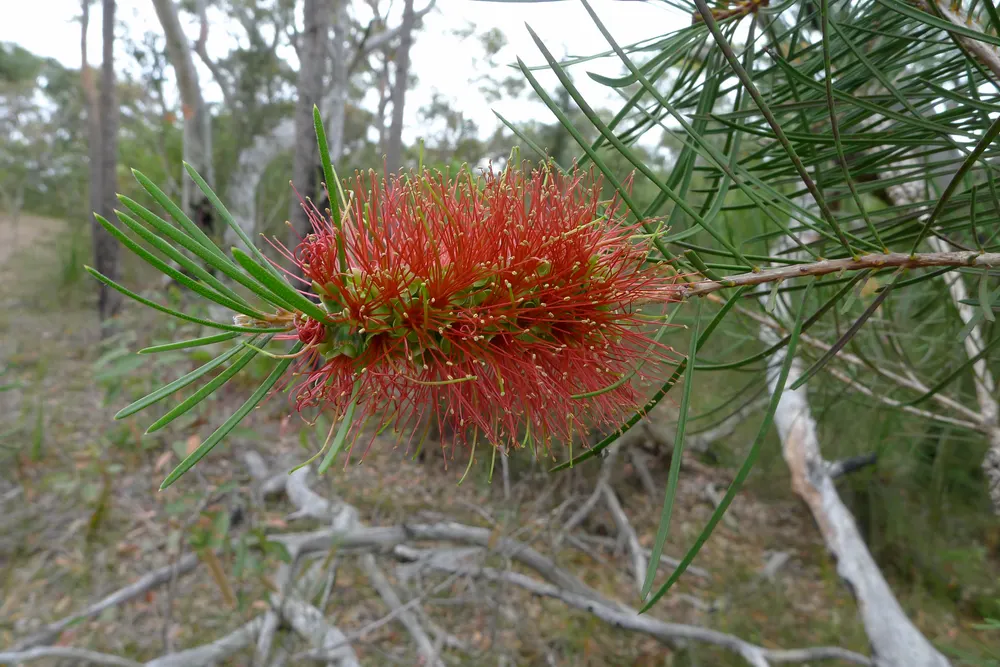
Photo: John Tann from Sydney, Australia, CC BY 2.0 (via Wikimedia Commons)
Stiff Bottlebrush
Callistemon rigidus
Also known as Stiff-leaved Bottlebrush, Erect Bottlebrush, Bottlebrush
Key benefits
✦Traditional uses
✦Callistemon rigidus is a native of the creek banks and swampy flats of eastern Australia, where its crimson, bristling flower spikes have long marked the water's edge. Aboriginal communities in its home range traditionally soaked or gently shook the nectar-rich flower spikes in water to sweeten it into a simple bush drink, and the plant's pliant young branches and fibrous bark found everyday use in binding, thatching, and kindling. Today its story is less about the medicine chest and more about the garden and the birdbath, prized as a magnet for honeyeaters and bees and as a tough, faithful presence along fences and slopes. It has never been a mainstay of Western herbalism, and its reputation rests firmly on its beauty and its generosity to wildlife rather than on any well-documented remedy.
How to grow & use it
✦The full apothecary for Stiff Bottlebrush
Traditional remedies and step-by-step preparations, a complete growing guide, and how to harvest, dry, and store it, all unlocked with HerbLens Unlimited.
- ✦Remedies & preparations
- ✦ Growing guide
- ✦Harvest & storage
From under $6 a month. Free plant identifications always included.
- ✦Kangaroo paw
- ✦Grevillea
- ✦Banksia
- ✦Callistemon citrinus (crimson bottlebrush)
- ✦Melaleuca species
“For the gardener who wants a blaze of red at the fence line and a steady stream of birds to watch from the porch.”
What looks like a single flashy flower is actually dozens of tiny individual flowers packed along the stem, and the color comes almost entirely from their long stamens rather than petals, which is exactly why the whole spike resembles a brush for cleaning a bottle.
Stiff bottlebrush is grown as an ornamental, not eaten or used medicinally, and hasn't been studied for internal use. Its pollen can trigger seasonal allergies in sensitive people, so keep children and pets from chewing the leaves or seed capsules.