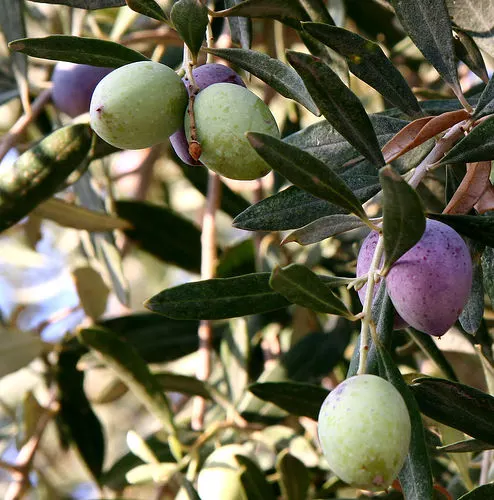
Photo: en:User:Nickfraser, CC BY-SA 3.0 (via Wikimedia Commons)
Olive
Olea europaea
Also known as Common Olive, European Olive, Olive Leaf
Key benefits
✦Traditional uses
✦For thousands of years the olive tree has stood as one of the great pillars of Mediterranean life, its fruit pressed into oil for cooking, lamplight, anointing, and trade long before written history caught up with it. Beyond the kitchen, the silvery leaves have their own long folk history, steeped into bitter teas across Mediterranean, Middle Eastern, and North African households and traditionally reached for during fevers, colds, and to support healthy blood pressure and circulation. The olive branch itself became a universal symbol of peace and renewal, an idea nearly as old as the tree.
How to grow & use it
✦The full apothecary for Olive
Traditional remedies and step-by-step preparations, a complete growing guide, and how to harvest, dry, and store it, all unlocked with HerbLens Unlimited.
- ✦Remedies & preparations
- ✦ Growing guide
- ✦Harvest & storage
From under $6 a month. Free plant identifications always included.
- ✦Lemon Balm
- ✦Hawthorn
- ✦Rosemary
- ✦Green Tea
- ✦Hawthorn Leaf
“When you want the sunlit warmth of a Mediterranean hillside in a single spoonful.”
Some cultivated olive trees around the Mediterranean are believed to be well over a thousand years old and are still bearing fruit, making the olive one of the longest-lived fruiting trees cultivated by humans.
Olive fruit straight from the tree is bitter and must be cured or brined before eating, it isn't a toxicity concern, just unpalatable raw. Olive leaf preparations have traditionally supported blood pressure and blood sugar, so anyone on blood pressure medication, diabetes medication, or blood thinners should be cautious of combined effects.