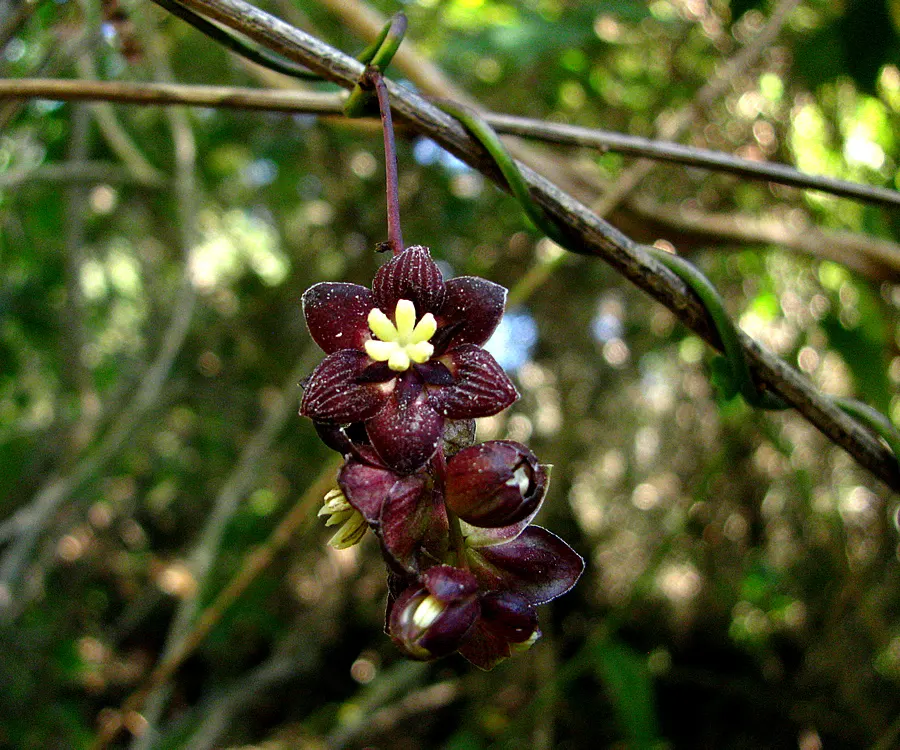
Photo: Inao Vásquez, CC BY-SA 2.0 (via Wikimedia Commons)
Coguil (Voqui Negro)
Lardizabala biternata
Also known as Voqui Negro, Coguilera, Black Voqui, Coguil Vine
Key benefits
✦Traditional uses
✦In the cool rainforests of Chile's Araucania and Los Lagos regions, coguil has long been valued less as a remedy than as a resource for daily life. The tough, pliable young stems, known locally as voqui, have been split and woven by Mapuche and Chilote artisans into baskets, cordage, and fish traps for generations, a craft still practiced and prized today. The dark, sausage-shaped fruit ripens in autumn and has traditionally been gathered and eaten out of hand by rural families and foragers, prized for its sweet, mild pulp. Unlike many entries in this atlas, coguil carries little documented history as a medicinal herb, its legacy is one of basketry and quiet forest foraging rather than the apothecary shelf.
How to grow & use it
✦The full apothecary for Coguil (Voqui Negro)
Traditional remedies and step-by-step preparations, a complete growing guide, and how to harvest, dry, and store it, all unlocked with HerbLens Unlimited.
- ✦Remedies & preparations
- ✦ Growing guide
- ✦Harvest & storage
From under $6 a month. Free plant identifications always included.
- ✦Maqui berries
- ✦Murtilla (Chilean guava)
- ✦Chilean guava (murtilla) as a similar native forest fruit
“For the quiet, sweet reward found deep in a southern rainforest, not for the medicine cabinet.”
The flexible stems of coguil, called voqui, are the same fiber used to weave the traditional baskets of Chiloe Island, a craft so central to local identity that entire village economies have grown around it.
Only the fully ripe, dark fruit of this vine is traditionally eaten; unripe fruit and other parts are not used and should be avoided. As with any wild fruit, confirm identification before tasting, since it has not been studied for internal medicinal use.