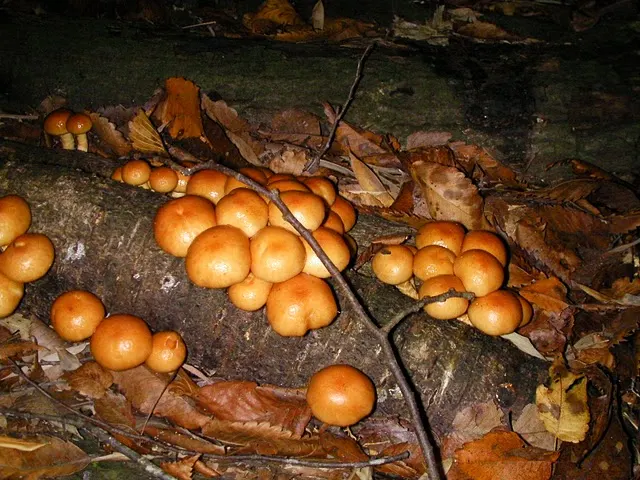
Photo: Hillbourne, CC BY-SA 3.0 (via Wikimedia Commons)
Nameko Mushroom
Pholiota nameko
Also known as Nameko, Butterscotch Mushroom, Viscid Mushroom, Namerimoji
Key benefits
✦Traditional uses
✦In Japan, nameko has been gathered and cultivated for generations, prized above all for the silky, gelatinous coating that forms on its cap, a texture cooks say helps a broth cling to the tongue and coat the throat. It became a mainstay of humble, warming winter cooking, most famously in nameko miso soup, a dish long offered to family members with unsettled stomachs or the first chills of a cold. Long before mushroom cultivation was formalized on hardwood logs in the twentieth century, foragers watched for its honey-colored clusters on fallen beech trees each autumn, and its slippery, nourishing broth became a household comfort food passed down as much as a foraged treasure.
How to grow & use it
✦The full apothecary for Nameko Mushroom
Traditional remedies and step-by-step preparations, a complete growing guide, and how to harvest, dry, and store it, all unlocked with HerbLens Unlimited.
- ✦Remedies & preparations
- ✦ Growing guide
- ✦Harvest & storage
From under $6 a month. Free plant identifications always included.
- ✦Miso
- ✦Daikon radish
- ✦Tofu
- ✦Shiitake mushroom
- ✦Enoki mushroom
“When you want a silky, earthy broth that seems to warm the whole body from the inside out.”
The name nameko comes from the Japanese word nameraka, meaning smooth or slippery, a nod to the glistening, gelatinous coating that forms on the cap and makes the mushroom so distinctive in soup.
Nameko is a safe, cultivated edible mushroom when cooked thoroughly, as is standard for all mushrooms. Don't forage it casually in the wild, since it can be confused there with Galerina marginata, a deadly poisonous lookalike.