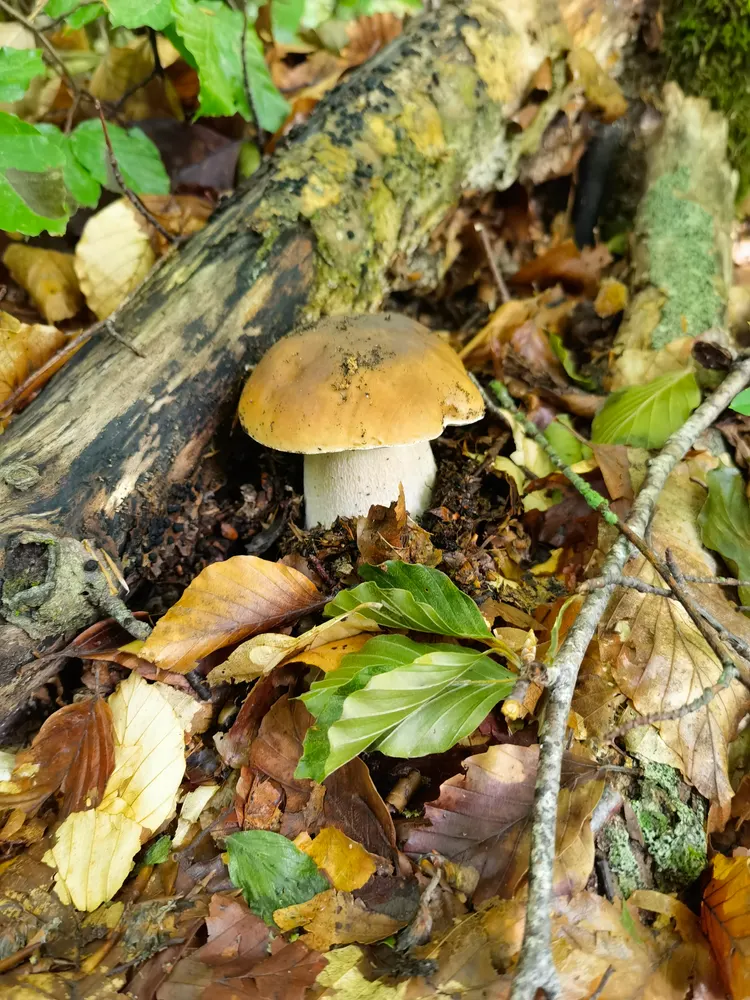
Photo: ReddishClover, CC BY-SA 4.0 (via Wikimedia Commons)
Porcini
Boletus edulis
Also known as King Bolete, Cep, Penny Bun, Steinpilz
Key benefits
✦Traditional uses
✦Porcini has been gathered from European forests since Roman times, when Pliny the Elder wrote admiringly of woodland boletes, and it has never really fallen out of favor since. Italian, French, and Slavic households built entire autumn rituals around the hunt, then strung the caps to dry over the hearth so the forest's flavor could carry through winter. In lean seasons, a simple broth of dried porcini simmered with water was treated as a humble, warming food, something to serve a tired or unwell family member alongside bread. It remains, above all, a kitchen treasure rather than a medicine chest herb, valued for the deep savoriness it lends to broths, risottos, and sauces.
How to grow & use it
✦The full apothecary for Porcini
Traditional remedies and step-by-step preparations, a complete growing guide, and how to harvest, dry, and store it, all unlocked with HerbLens Unlimited.
- ✦Remedies & preparations
- ✦ Growing guide
- ✦Harvest & storage
From under $6 a month. Free plant identifications always included.
- ✦Thyme
- ✦Bay leaf
- ✦Parsley
- ✦Portobello mushroom
- ✦Dried shiitake
“For the deep, earthy taste of the forest itself.”
The name porcini simply means little pigs in Italian, a fond nod to the plump, round caps that push up through the leaf litter looking rather like a row of little snouts.
Porcini is a well-regarded edible mushroom when correctly identified and cooked, but it must never be eaten raw. Positive identification matters, since toxic look-alikes exist, so have new foraging finds confirmed by an experienced guide.