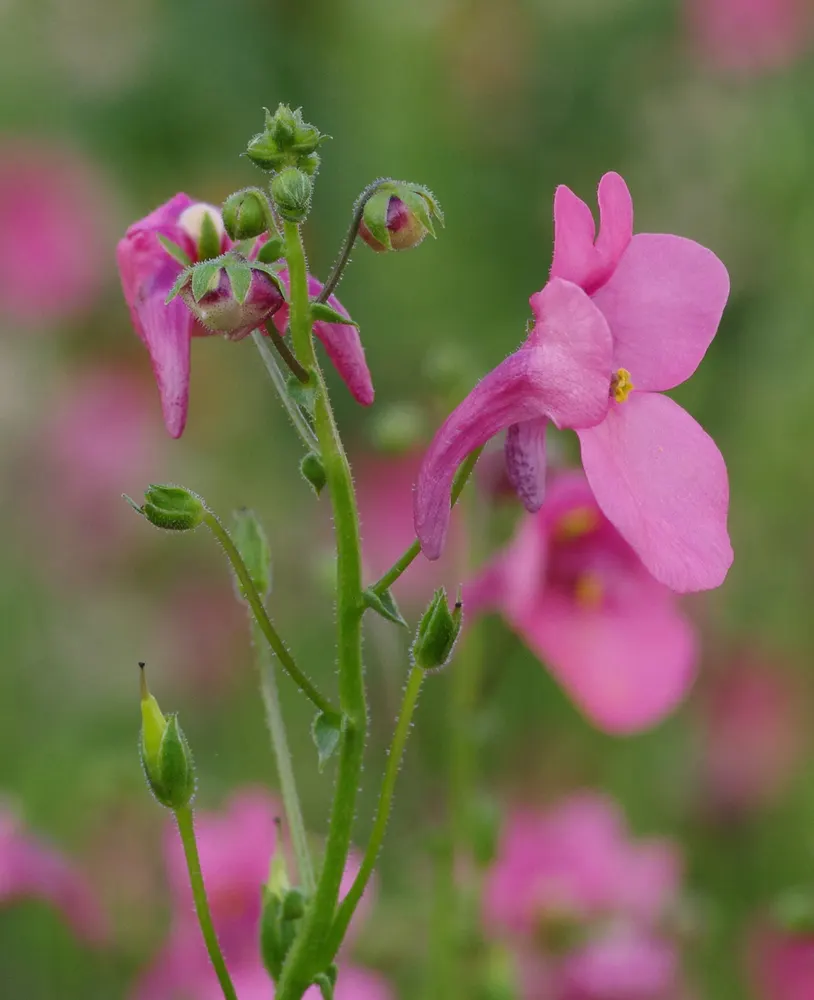
Photo: El Grafo, CC BY-SA 3.0 (via Wikimedia Commons)
Twinspur
Diascia barberae
Also known as Barberton Twinspur, Barber's Diascia, Coral Twinspur
Key benefits
✦Traditional uses
✦Diascia barberae carries no folk medicine or culinary history that we know of. It earned its keep in gardens rather than apothecaries, first collected in the mountains of what is now KwaZulu-Natal in the nineteenth century and named for Mrs. Barber, a South African botanical illustrator and plant collector who helped bring it to the attention of European horticulturists. Since then it has traveled from wild grassland slopes into cottage gardens and hanging baskets around the world, valued simply for the cheerful abundance of its coral pink blooms. Its story is a gardener's story, not a healer's, and we tell it here for that honest reason.
How to grow & use it
✦The full apothecary for Twinspur
Traditional remedies and step-by-step preparations, a complete growing guide, and how to harvest, dry, and store it, all unlocked with HerbLens Unlimited.
- ✦Remedies & preparations
- ✦ Growing guide
- ✦Harvest & storage
From under $6 a month. Free plant identifications always included.
- ✦Nemesia
- ✦Bacopa
- ✦Trailing Verbena
- ✦Nemesia
- ✦Angelonia
“For the gardener who wants a low, easy carpet of warm pink that keeps blooming long after the spring flush has faded elsewhere.”
Each twinspur flower gets its name from a pair of small backward pointing spurs that, instead of nectar, secrete floral oil. In its native South Africa this oil is gathered almost exclusively by specialized Rediviva bees, which use their unusually long front legs to reach into the spurs and collect it to provision their nests, a pairing so specific that certain Diascia species and their bees are thought to have evolved together.
Diascia barberae has no documented history of food or medicinal use, and no reliable toxicity or edibility data exists for it either. Because of that, it should be treated as an ornamental plant only, not eaten or brewed, and kept out of the reach of pets and small children who might be tempted to sample garden flowers, as a general precaution with any unstudied plant. If you have questions about a plant you or a family member may have ingested, please contact a poison control center or a qualified healthcare professional right away rather than relying on a general reference like this one.