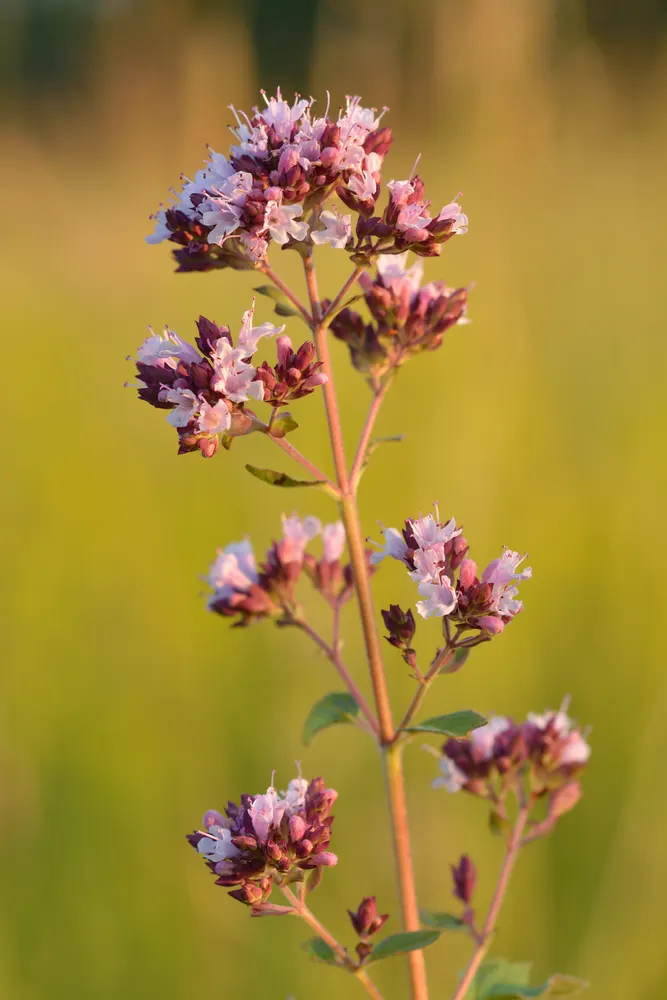
Photo: Ivar Leidus, CC BY-SA 3.0 (via Wikimedia Commons)
Oregano
Origanum vulgare
Also known as Wild Marjoram, Mountain Joy, Origan, Pot Marjoram
Key benefits
✦Traditional uses
✦Oregano's name comes from the Greek oros and ganos, roughly meaning joy of the mountain, and the ancient Greeks wove it into wreaths for brides and grooms as a symbol of happiness and peace. Hippocrates is said to have used it as an antiseptic wound wash and a remedy for respiratory and stomach complaints, and that dual reputation, kitchen herb and household remedy, followed it through Mediterranean and later European folk medicine. Generations of home cooks and healers turned to warm oregano tea for a nagging cough, a tight chest, or a stomach unsettled after a heavy meal, valuing it as much for comfort as for flavor.
How to grow & use it
✦The full apothecary for Oregano
Traditional remedies and step-by-step preparations, a complete growing guide, and how to harvest, dry, and store it, all unlocked with HerbLens Unlimited.
- ✦Remedies & preparations
- ✦ Growing guide
- ✦Harvest & storage
From under $6 a month. Free plant identifications always included.
- ✦Thyme
- ✦Basil
- ✦Rosemary
- ✦Marjoram
- ✦Thyme
“When a cold settles into the chest and the kitchen is the warmest room to fight it from.”
Oregano's essential oil is so concentrated that it takes roughly 100 pounds of fresh leaves to distill just one pound of oil, which is part of why a few crushed dried leaves can perfume an entire pot of sauce.
Oregano is safe as a culinary seasoning. In medicinal-strength doses, oregano oil may interact with blood thinners and diabetes medications, irritate the stomach, and trigger allergic reactions in people sensitive to the mint family, and it has traditionally been avoided at those doses during pregnancy.