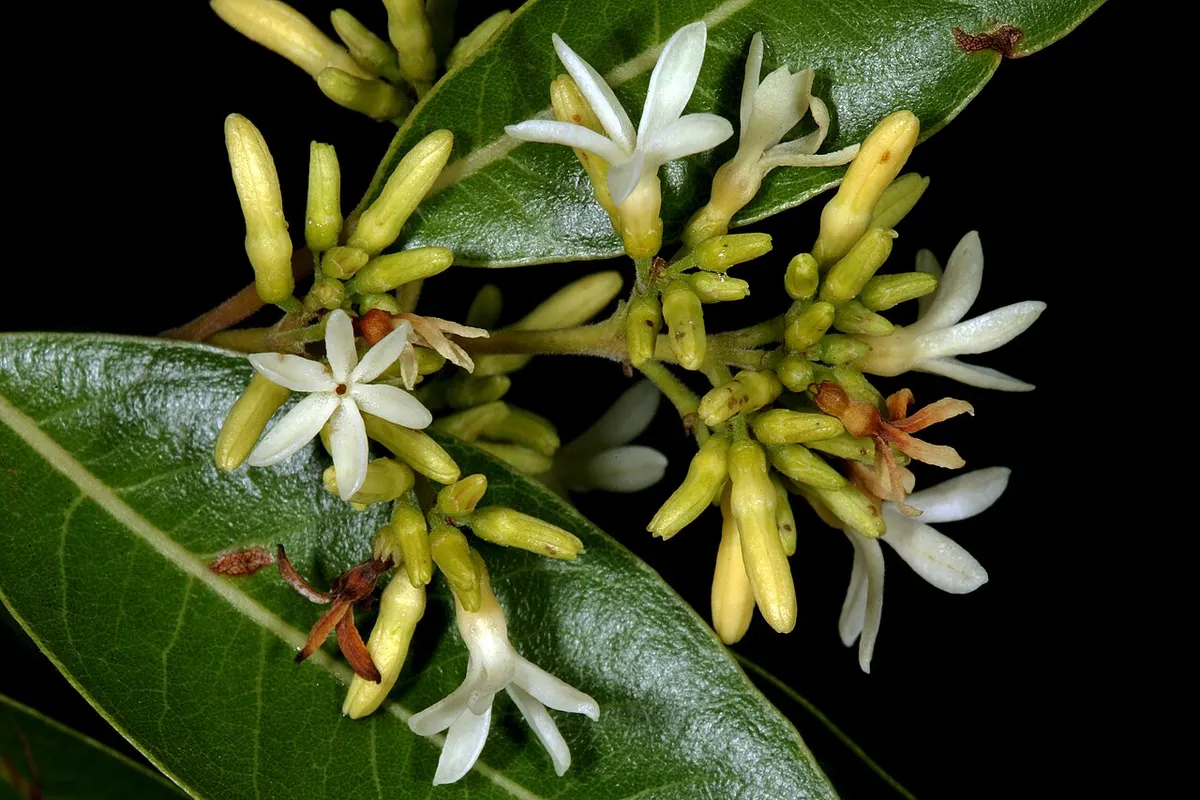
Photo: SAplants, CC BY-SA (via Wikimedia Commons)
Horn-pod Tree
Diplorhynchus condylocarpon
Also known as Horn-pod tree, Wonder-tree (regional), Mutowa/Muzeze (various Bantu-language names)
Key benefits
✦Traditional uses
✦Across the miombo woodlands where it grows, the horn-pod tree has long been valued less as a medicine cabinet than as a working tree of the bush. Communities in Zimbabwe, Zambia, and Malawi traditionally tapped its copious white latex and smeared it onto branches as a sticky bird-lime, used to trap small birds long before shotguns and snares became common. Its tough, reddish wood was shaped into tool handles, digging sticks, and small household items, and the curious paired, horn-shaped seed pods that give the tree its name were gathered once split open for the silky floss inside, sometimes used to stuff pillows in the way kapok is used elsewhere. Because the tree belongs to a family known for potent latex chemistry, its traditional value has centered on these practical, external uses rather than on brewing it as a tonic.
How to grow & use it
✦The full apothecary for Horn-pod Tree
Traditional remedies and step-by-step preparations, a complete growing guide, and how to harvest, dry, and store it, all unlocked with HerbLens Unlimited.
- ✦Remedies & preparations
- ✦ Growing guide
- ✦Harvest & storage
From under $6 a month. Free plant identifications always included.
- ✦Brachystegia (miombo) trees as woodland companions
- ✦Julbernardia species sharing the same woodland canopy
- ✦Combretum trees found in the same dry bushveld habitat
- ✦There is no well-established herbal substitute for horn-pod tree, since it has not been used as a culinary or tea herb; for its traditional bird-lime and craft uses, other latex-bearing woodland trees were sometimes used in its place regionally
“For the tree that marks a well-worn woodland path, its horn-shaped pods cracking open to send silk into the dry season air.”
The tree's name comes from its seed pods, which grow in curved, horn-like pairs and split open along dry woodland paths to release seeds tufted with silvery, kapok-like floss that drifts off on the wind.
Diplorrhynchus condylocarpon belongs to the Apocynaceae, or dogbane family, a plant family well known for producing latex and sap that can contain irritant or toxic compounds, including cardiac-active substances in many of its relatives. The tree's own latex has traditionally been used only for external, non-ingestible purposes such as bird-lime and craft applications, and it has not been established as safe to eat, brew, or otherwise take internally. Its sap may irritate skin, eyes, or mucous membranes on contact. Because reliable safety and dosing information for internal use is lacking, it should not be ingested, and it is not recommended during pregnancy, while nursing, or for children without guidance from a qualified professional. Always talk to a knowledgeable herbalist, physician, or regional ethnobotanical expert before considering any use of this plant.