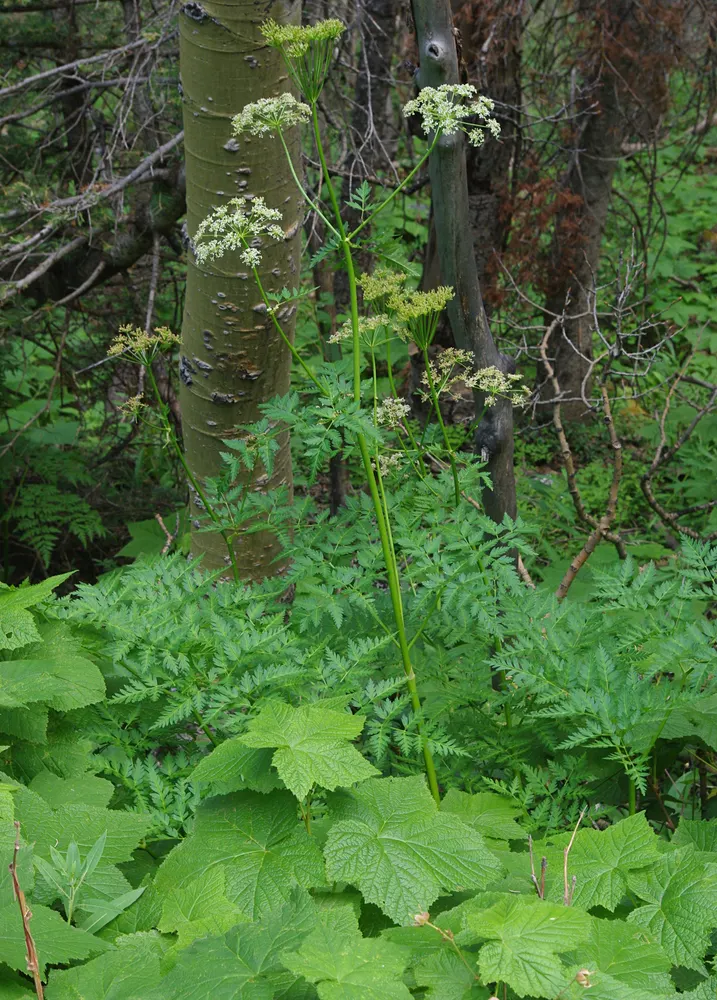
Photo: JerryFriedman, CC BY-SA 3.0 (via Wikimedia Commons)
Osha
Ligusticum porteri
Also known as Bear Root, Chuchupate, Colorado Cough Root, Porter's Lovage
Key benefits
✦Traditional uses
✦For generations, osha has been one of the most trusted roots of the Southern Rocky Mountains, dug each fall by Navajo, Zuni, Apache, and Ute herbalists and carried home to see families through the cold season. Its pungent, celery-like root was chewed for sore throats, simmered into teas for coughs and congestion, and kept in pouches as a traveler's remedy against the chest colds that came with high-altitude winters. Ranchers and mountain travelers later adopted the same root, calling it Colorado cough root, and it remains one of the most recognized wild roots in Southwestern herbal tradition today.
How to grow & use it
✦The full apothecary for Osha
Traditional remedies and step-by-step preparations, a complete growing guide, and how to harvest, dry, and store it, all unlocked with HerbLens Unlimited.
- ✦Remedies & preparations
- ✦ Growing guide
- ✦Harvest & storage
From under $6 a month. Free plant identifications always included.
- ✦Mullein
- ✦Licorice Root
- ✦Elderberry
- ✦Angelica Root
- ✦Lovage Root
“When a mountain cold has settled deep in the chest and the throat needs something warm and rooted to lean on.”
Osha's nickname, bear root, comes from a real observation: grizzly bears dig up and chew the root, especially after waking from hibernation. Several Southwestern tribes took this as a sign of the plant's power, believing that if the bear sought it out, it was worth learning from.
Belongs to the carrot family and grows alongside deadly lookalikes such as poison hemlock and water hemlock, which have killed foragers who misidentified them, so never gather the root without expert identification. Traditionally avoided during pregnancy, and those with celery or carrot allergies should use caution.