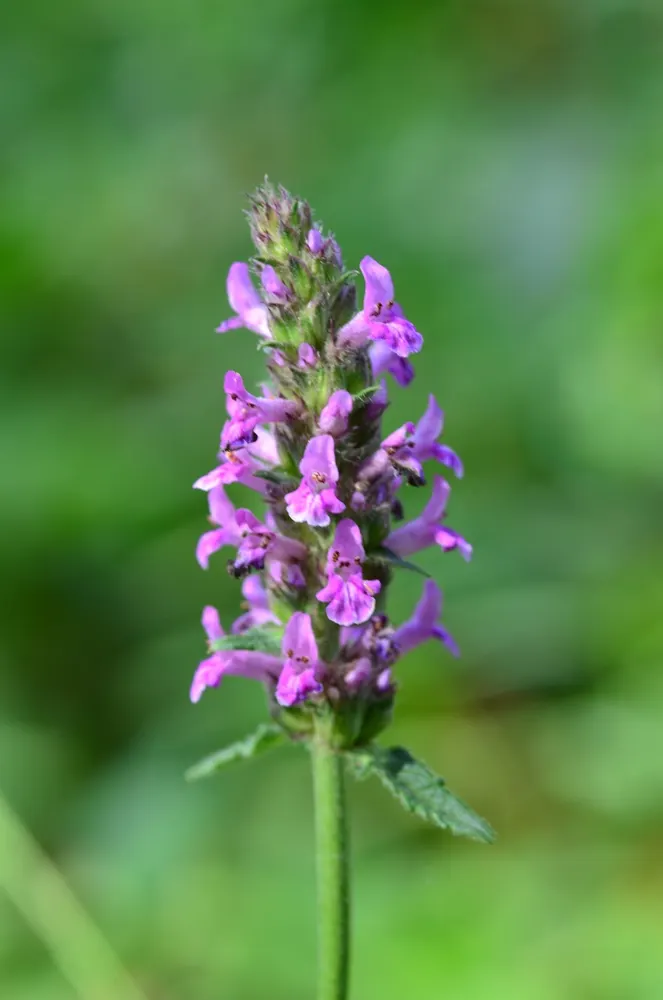
Photo: Radio Tonreg from Vienna, Austria, CC BY 2.0 (via Wikimedia Commons)
Betony (Wood Betony)
Betonica officinalis
Also known as Wood Betony, Bishopwort, Purple Betony, Stachys officinalis, Bishop's Wort
Key benefits
✦Traditional uses
✦Betony carried a reputation in old Europe that bordered on the miraculous. Anglo-Saxon healers listed it among their most trusted herbs, and a well-known Italian saying urged people to 'sell your coat and buy betony,' a nod to how highly its protective, restorative powers were once regarded. Herbalists through the centuries turned to its leaves and flowering tops as a calming nervine for frazzled nerves and tension headaches, as a gentle bitter to settle the stomach after a heavy meal, and as a wash for minor cuts and scrapes. It found its way into monastery gardens and cottage plots alike, always close at hand for whatever ailment the day brought.
Growing guide
✦Fresh to dried
✦Traditional preparations
✦Calming Betony Tea
A traditional infusion herbalists turned to at the end of a long day, sipped to ease tension and settle a busy mind.
How it's made. Traditionally, a tea is made by steeping 1 teaspoon of the dried leaf and flower in 250 ml of just-boiled water for 10 minutes, then strained and sipped warm.
After-Meal Digestive Infusion
A milder cup traditionally taken following a rich meal to encourage easy digestion.
How it's made. Steep 1/2 teaspoon of dried betony in 250 ml of hot water for 5 to 8 minutes, strain, and drink slowly after eating.
- ✦Chamomile
- ✦Lemon Balm
- ✦Lavender
- ✦Skullcap
- ✦Vervain
“For the evening when your thoughts won't settle and the day needs a gentle close.”
Medieval households scattered betony leaves in the belief they warded off bad dreams and evil spirits, and the plant was so trusted as a cure-all that an old proverb claimed one should sell their coat just to afford it.
Wood betony tea is generally gentle, but it should be avoided during pregnancy due to a traditional uterine-stimulating effect, and it may add to the effects of sedative medications.