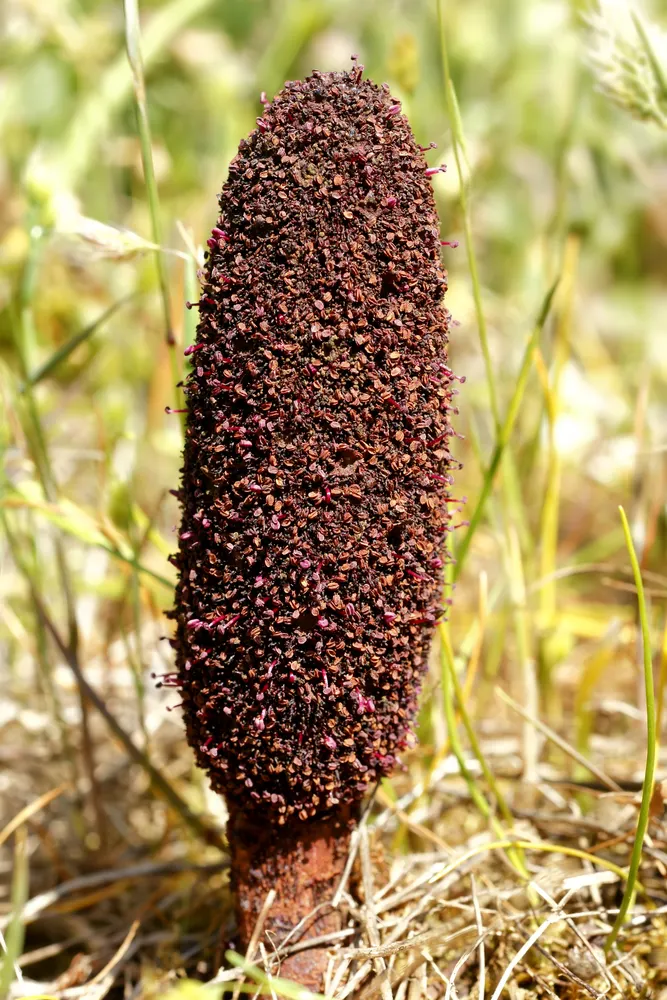
Photo: Hans Hillewaert, CC BY-SA 3.0 (via Wikimedia Commons)
Suo Yang
Cynomorium songaricum
Also known as Songaria Cynomorium, Cynomorium, Suoyang
Key benefits
✦Traditional uses
✦For generations, desert communities across Gansu, Inner Mongolia, and Xinjiang have dug this strange, root-like stem from the sand each spring, prizing it as one of the great tonic herbs of Chinese medicine. It has traditionally been used to warm and fortify what practitioners call kidney yang, the body's deep reserve of vitality, especially in those feeling depleted, cold, or worn thin by age or long illness. Herbalists also reached for it to gently ease dryness in the intestines, and to support strength in the low back, knees, and legs. Because it emerges fleshy and moist from some of the driest ground on earth, it earned a lasting reputation as a plant that restores what harsh conditions take away.
How to grow & use it
✦The full apothecary for Suo Yang
Traditional remedies and step-by-step preparations, a complete growing guide, and how to harvest, dry, and store it, all unlocked with HerbLens Unlimited.
- ✦Remedies & preparations
- ✦ Growing guide
- ✦Harvest & storage
From under $6 a month. Free plant identifications always included.
- ✦Cistanche (Rou Cong Rong)
- ✦Goji berry
- ✦Eucommia bark
- ✦Cistanche deserticola
- ✦Epimedium (horny goat weed)
“When your reserves feel spent and dry, and you long for grounded, quiet strength.”
Suo Yang has no leaves and no chlorophyll at all. It survives entirely by tapping into the roots of desert shrubs for water and nutrients, which is why its Chinese name translates roughly to "locking in yang," a nod to how this quietly stolen vitality was thought to be sealed within the plant itself.
Suo yang is a warming tonic traditionally avoided during diarrhea, damp-heat conditions, pregnancy, or with signs of excess internal heat. Use caution combining it with other yang-tonifying herbs or hormone medication.