Photo: Borealis55, Public domain (via Wikimedia Commons)
Asian Moonseed (Dahurian Moonseed)
Menispermum dauricum
Also known as Dahurian Moonseed, Asian Moonseed, Bei Dou Gen, Northern Moonseed
Key benefits
✦Traditional uses
✦In its native range across northern China, Korea, Japan, and the Russian Far East, the dried rhizome of Menispermum dauricum has long held a place in traditional Chinese medicine under the name Bei Dou Gen, where it was reserved for sore throats, coughing fits, and feverish, inflamed conditions. Practitioners also turned to it for rheumatic aches and swelling, working it into carefully measured decoctions rather than everyday teas, since the same alkaloids that gave the root its reputation also demanded a steady, experienced hand. Because of that duality, the plant has always sat at the boundary between medicine and hazard, respected for its potency and handled with real caution. Today it is remembered as much for the lesson it teaches foragers, that a fruit resembling a wild grape is not always safe to eat, as for its place in old apothecary formularies.
Growing guide
✦Fresh to dried
✦- ✦Platycodon (balloon flower)
- ✦Forsythia
- ✦Scutellaria
- ✦Licorice root
- ✦Honeysuckle flower
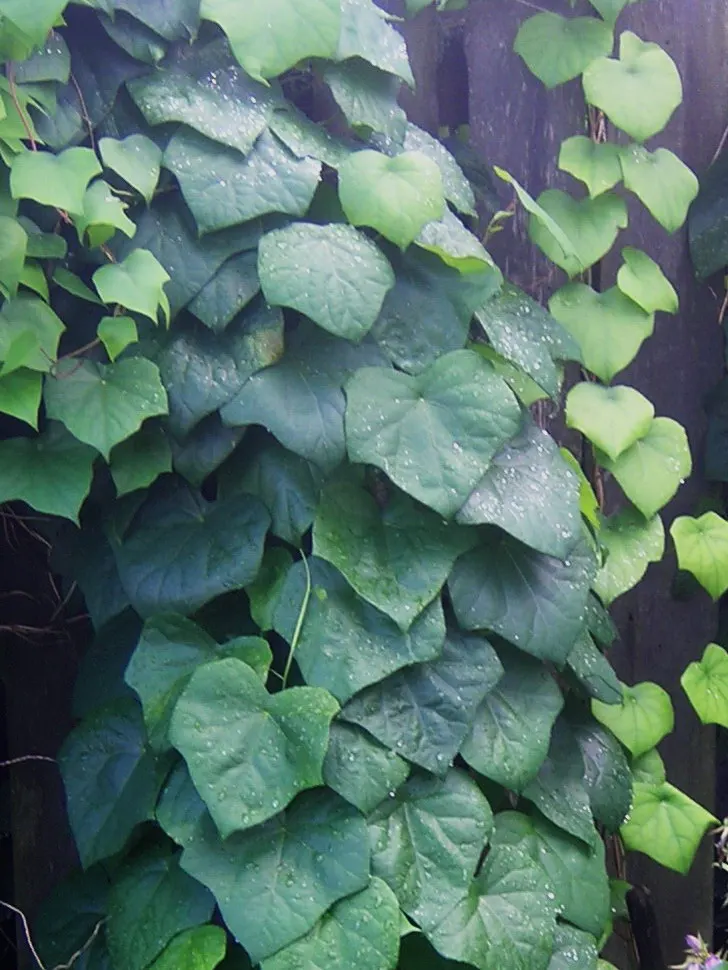
“A twining, moonlit vine best admired climbing a garden trellis, and never mistaken for the wild grapes it so convincingly imitates.”
The genus name Menispermum comes from the Greek mene, meaning moon, and sperma, meaning seed, a nod to the small crescent-shaped seed tucked inside each fruit, which is often the surest way to tell a moonseed berry apart from a true wild grape before it is too late.
Menispermum dauricum is considered toxic and should not be eaten or self-dosed in any form. The whole plant, and especially the blue-black fruit and the rhizome, contains isoquinoline alkaloids such as dauricine, daurisoline, and magnoflorine, and moonseed poisoning is a well documented foraging hazard because the fruit so closely mimics wild grapes. Ingestion of the berries or an improperly prepared root has been linked to vomiting, dizziness, muscle weakness, convulsions, and disturbances to heart rhythm, and cases have proven fatal, particularly in children who mistake the fruit for grapes. In traditional Chinese medicine the dried rhizome, known as Bei Dou Gen, is used only as a carefully processed, precisely measured ingredient in professionally prepared decoctions, never as a home remedy, and it is generally avoided during pregnancy and breastfeeding and by anyone with a heart condition or on cardiac medication. This entry is offered for botanical and historical interest only. Please do not forage, prepare, or ingest this plant, and speak with a qualified physician or licensed TCM practitioner before considering any herb with a known toxicity profile.