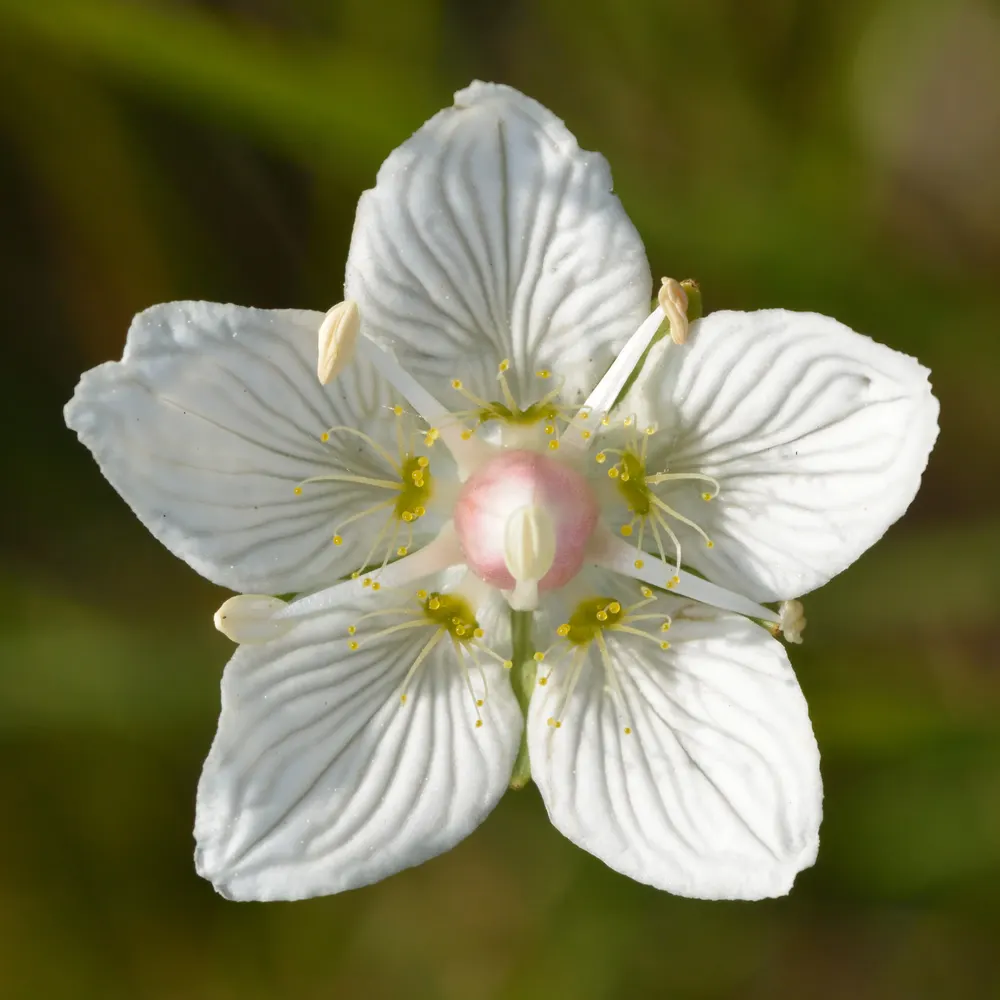
Photo: Ivar Leidus, CC BY-SA 4.0 (via Wikimedia Commons)
Grass of Parnassus
Parnassia palustris
Also known as Bog Star, Marsh Grass of Parnassus, White Bog Star
Key benefits
✦Traditional uses
✦Despite its name, grass of Parnassus is not a grass at all, but a solitary wetland wildflower that has quietly threaded through European folk medicine for centuries. Old herbals, including those of the Scottish Highlands, describe the fresh plant being used for troubled eyes and the dried herb brewed into a decoction for jaundice and sluggish liver complaints. It earned its poetic name from writers who linked it to Mount Parnassus in Greece, home of Apollo and the Muses, lending an almost sacred air to a humble bog flower. By the time of Renaissance herbalists like Gerard, it had settled into cottage medicine as a gentle, unassuming remedy rather than a dramatic cure.
How to grow & use it
✦The full apothecary for Grass of Parnassus
Traditional remedies and step-by-step preparations, a complete growing guide, and how to harvest, dry, and store it, all unlocked with HerbLens Unlimited.
- ✦Remedies & preparations
- ✦ Growing guide
- ✦Harvest & storage
From under $6 a month. Free plant identifications always included.
- ✦Dandelion root
- ✦Milk thistle
- ✦Chamomile
- ✦Dandelion root
- ✦Self-heal
“When the autumn bog turns gold and a single white star opens above the moss, that quiet flower is grass of Parnassus.”
The name has nothing to do with grasses at all. Ancient writers, including Dioscorides, described a prized plant growing on the slopes of Mount Parnassus in Greece, and later herbalists borrowed that storied name for this small white-flowered bog dweller, giving a modest wetland plant a name fit for the home of the Muses.
Grass of Parnassus tea should be used only occasionally and in modest amounts, and avoided during pregnancy, breastfeeding, or with liver or kidney conditions. Its traditional use as an eye rinse isn't recommended today, since homemade preparations risk eye irritation or infection.