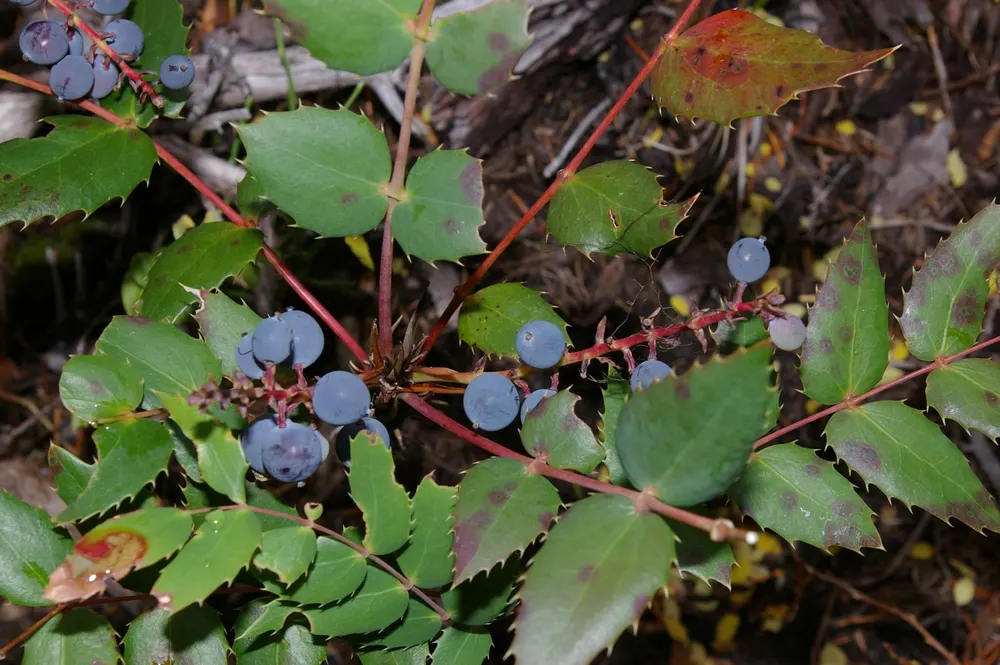
Photo: brewbooks from near Seattle, USA, CC BY-SA 2.0 (via Wikimedia Commons)
Dull Oregon Grape
Mahonia nervosa
Also known as Cascade Oregon Grape, Dwarf Oregon Grape, Longleaf Mahonia, Cascade Barberry
Key benefits
✦Traditional uses
✦Long before it had a Latin name, this low forest shrub was known to Pacific Northwest peoples including the Coast Salish, Skagit, and Cowlitz, who scraped its bright yellow inner bark and simmered the roots into bitter decoctions. The berberine that colors the wood so vividly also made the plant a go-to bitter tonic, traditionally used to stir a sluggish appetite, ease digestive complaints, and support the liver after a heavy winter of stored foods. Root preparations were also applied traditionally for skin troubles and low-grade infections, and the same golden roots were boiled down by basket weavers and settlers alike to dye wool, cedar bark, and cloth a deep, sunny yellow. It grows as a quieter, shorter-statured cousin of the more famous Oregon grape, Mahonia aquifolium, sharing its chemistry but hugging the forest floor instead of standing tall.
How to grow & use it
✦The full apothecary for Dull Oregon Grape
Traditional remedies and step-by-step preparations, a complete growing guide, and how to harvest, dry, and store it, all unlocked with HerbLens Unlimited.
- ✦Remedies & preparations
- ✦ Growing guide
- ✦Harvest & storage
From under $6 a month. Free plant identifications always included.
- ✦Dandelion root
- ✦Burdock root
- ✦Ginger
- ✦Oregon grape (Mahonia aquifolium)
- ✦Barberry root (Berberis vulgaris)
“For the quiet gold hidden under fir and cedar, where bitterness becomes medicine.”
Snap a piece of Mahonia nervosa root or bark and the wood underneath glows a startling bright yellow, a natural dye so reliable that Pacific Northwest basket weavers and early settlers alike simmered the roots down to color wool and cedar bark a sunny gold.
Dull Oregon grape contains berberine, which is avoided during pregnancy and breastfeeding and should never be given to infants due to a risk of jaundice. Berberine can also interact with certain antibiotics and blood thinners.