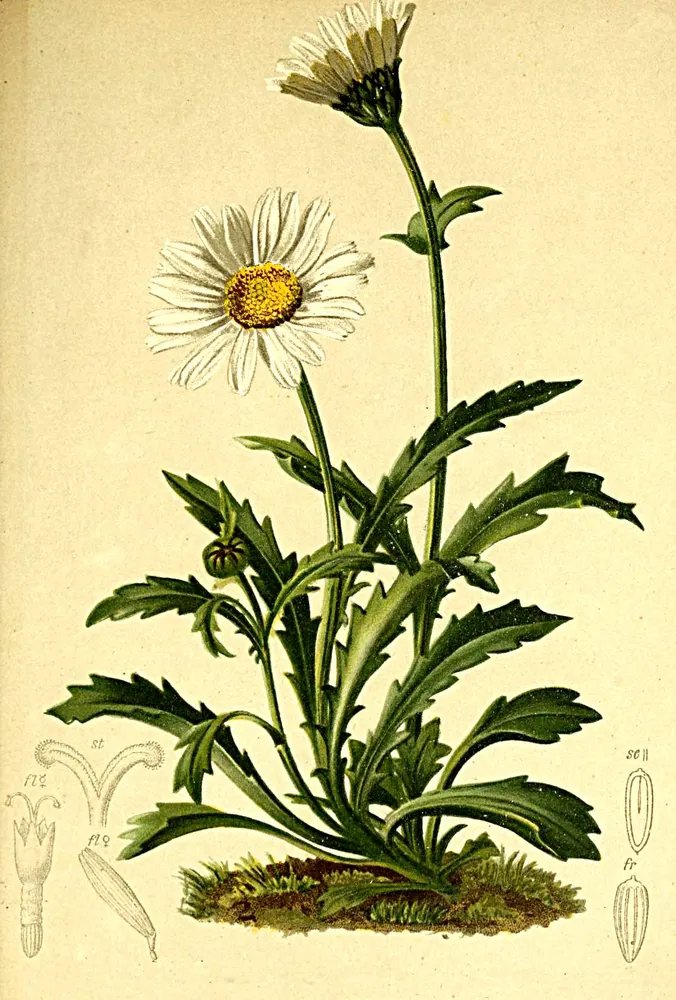
Photo: Anton Hartinger, Public domain (via Wikimedia Commons)
Alpine Moon Daisy
Leucanthemum alpinum
Also known as Alpine Ox-eye Daisy, Alpine Marguerite
Key benefits
✦Traditional uses
✦High in the scree and short turf above the treeline, the alpine moon daisy has long been treasured simply for showing up where little else will bloom, opening its white, sun-faced flowers through the short mountain summer. Alpine botanists and cottage gardeners alike have prized it since the nineteenth century as one of the toughest little daisies for rock gardens and stone troughs, a miniature echo of the meadow oxeye daisy scaled down to survive wind, thin soil, and a brief growing season. Like many members of the daisy tribe, its common name carries the old English idea of the 'day's eye,' a flower that opens with the sun and closes at dusk, though this particular alpine cousin belongs more to the story of mountain gardens than to the herbalist's cupboard. It is not a plant with a deep, well documented history of medicinal use, and it is best appreciated and passed along for what it plainly is: a hardy, honest little flower of high, wild places.
How to grow & use it
✦The full apothecary for Alpine Moon Daisy
Traditional remedies and step-by-step preparations, a complete growing guide, and how to harvest, dry, and store it, all unlocked with HerbLens Unlimited.
- ✦Remedies & preparations
- ✦ Growing guide
- ✦Harvest & storage
From under $6 a month. Free plant identifications always included.
- ✦Saxifrage
- ✦Houseleek (Sempervivum)
- ✦Alpine gentian
- ✦Common oxeye daisy (Leucanthemum vulgare)
- ✦English daisy (Bellis perennis)
“For the gardener building a stone trough or scree bed and wanting a scrap of true mountain summer close to home.”
Because true alpine summers are so short, Leucanthemum alpinum often rushes from bud to full bloom in a matter of days, timing itself to the brief window between the last snowmelt and the first autumn frost.
No toxicity is documented, but as a daisy-family plant it may cause skin irritation in those sensitive to ragweed or chrysanthemums.