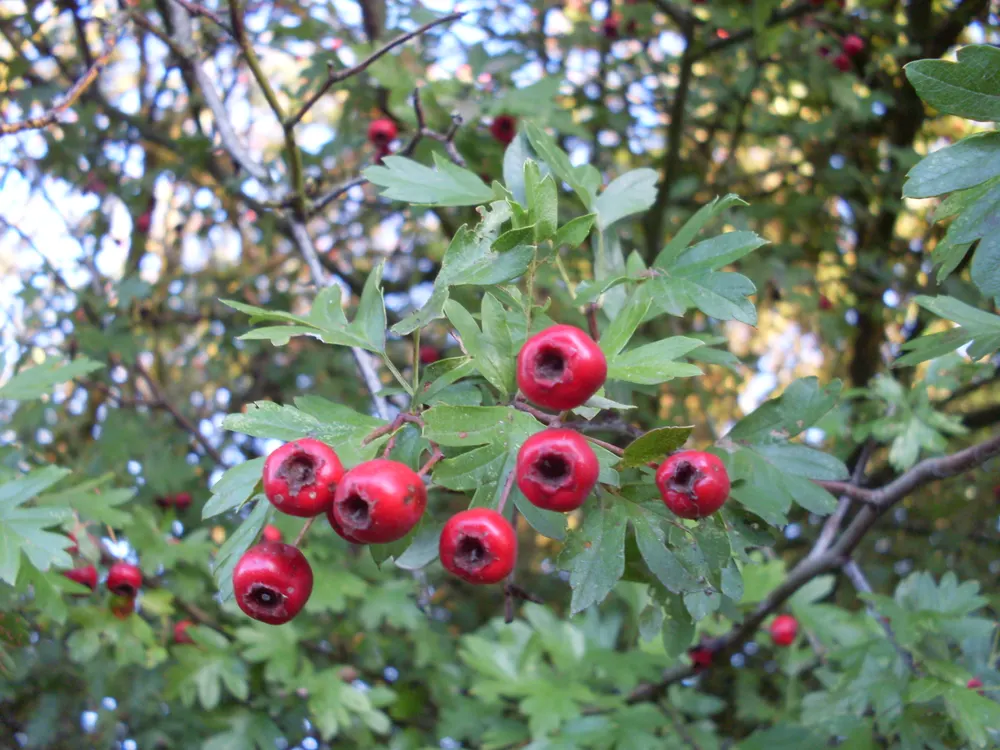
Photo: Elstro, CC BY 3.0 (via Wikimedia Commons)
Hawthorn
Crataegus monogyna
Also known as May-tree, Whitethorn, Quickthorn, Bread and cheese tree, Haw
Key benefits
✦Traditional uses
✦Hawthorn has been called the heart herb for good reason. European folk healers turned to its blossoms, leaves, and small red berries for generations to traditionally support an aging or overworked heart and to calm the kind of nervous flutter that seems to live right behind the breastbone. Its thorny hedges once marked the edges of fields and farms, and in the countryside it carried a double reputation, prized as medicine and treated with a wary respect as a tree of the fairies that should never be cut down carelessly. Herbalists of the nineteenth century helped bring hawthorn out of the hedgerow and into the apothecary, where it settled in as one of the most trusted tonics for matters of the heart, a reputation it still holds in traditional herbal practice today.
How to grow & use it
✦The full apothecary for Hawthorn
Traditional remedies and step-by-step preparations, a complete growing guide, and how to harvest, dry, and store it, all unlocked with HerbLens Unlimited.
- ✦Remedies & preparations
- ✦ Growing guide
- ✦Harvest & storage
From under $6 a month. Free plant identifications always included.
- ✦Motherwort
- ✦Rose
- ✦Linden flower
- ✦Rose hips
- ✦Linden flower
“When the heart could use a little quiet, steady company.”
In old English villages, hawthorn was called the May-tree because it reliably burst into bloom around May Day, and children nicknamed its young spring leaves and buds bread and cheese for the hedgerow snack they made along country walks.
Hawthorn can interact with heart medications like digoxin and beta-blockers, as well as blood thinners, so check with a doctor before combining them. Safety in pregnancy and breastfeeding has not been established.