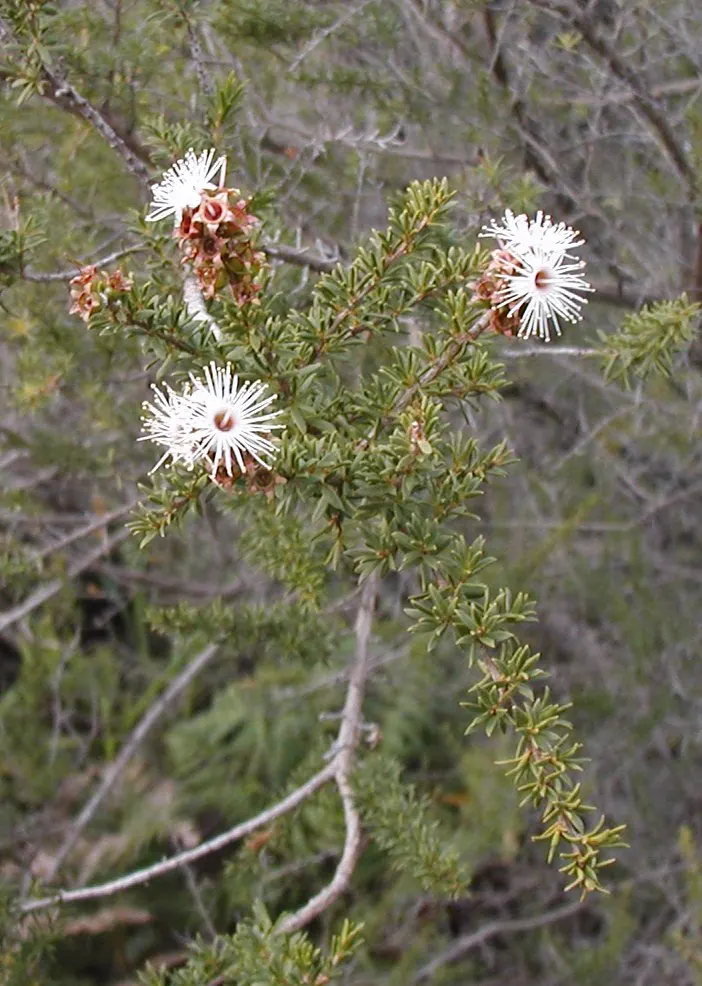
Photo: Casliber, Public domain (via Wikimedia Commons)
White Kunzea (Tick Bush)
Kunzea ambigua
Also known as White Kunzea, Tick Bush, Coastal Tea Tree, Kunzea
Key benefits
✦Traditional uses
✦Long before it had a Latin name, kunzea was the shrub that bush travelers in southeastern Australia and Tasmania reached for when the ground itself seemed to bite back. Its foliage was cut and scattered across sleeping areas and packed into hut floors, since ticks and fleas were noticed to steer clear of it, which is how the plant earned its enduring nickname, tick bush. Aboriginal Australians and early settlers alike valued the crushed, oil-rich leaves for their sharp, camphor-like fragrance, inhaling them for head colds and applying them to sore, overworked bodies. Today the essential oil distilled from its foliage carries that same tradition forward, prized as a gentler cousin to tea tree oil for the skin.
How to grow & use it
✦The full apothecary for White Kunzea (Tick Bush)
Traditional remedies and step-by-step preparations, a complete growing guide, and how to harvest, dry, and store it, all unlocked with HerbLens Unlimited.
- ✦Remedies & preparations
- ✦ Growing guide
- ✦Harvest & storage
From under $6 a month. Free plant identifications always included.
- ✦Tea Tree
- ✦Eucalyptus
- ✦Lavender
- ✦Tea Tree
- ✦Manuka
“When the day has settled into your shoulders and you want a scent that smells like coastal wind after rain.”
Kunzea ambigua was largely overlooked by the fragrance world until the twentieth century, when Tasmanian bushland harvesters realized the wild-growing shrub they kept finding tick-free was worth distilling in its own right, turning a humble roadside plant into a boutique essential oil industry.
Kunzea essential oil is for external use only and should never be ingested; dilute it before applying to skin and patch test first. Use extra caution around infants, young children, and during pregnancy.