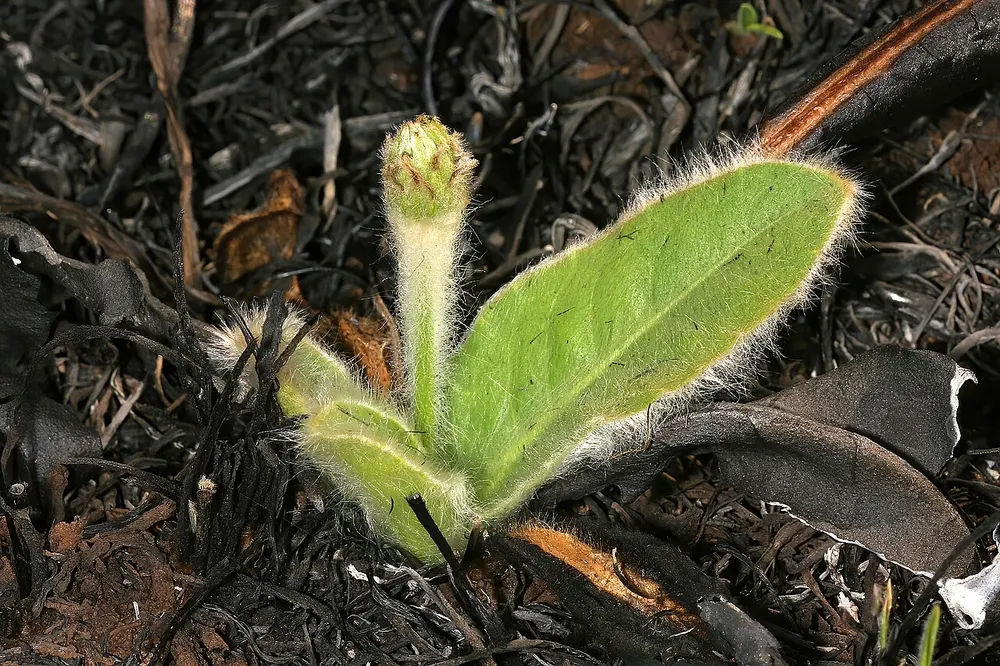
Photo: SAplants, CC BY-SA 4.0 (via Wikimedia Commons)
Woolly Gerbera
Gerbera piloselloides
Also known as Mouse-ear Gerbera, Hairy Gerbera, Mao Da Ding Cao
Key benefits
✦Traditional uses
✦In the folk medicine traditions of southern China and Southeast Asia, the whole plant of Gerbera piloselloides has long been gathered and dried for use as a cough remedy, brewed into simple infusions meant to calm a tickling throat and ease a tight chest. Village healers kept it as a humble, everyday herb, the sort stored in a jar by the hearth rather than reserved for grand occasions. Its woolly, ground-hugging rosette made it easy to spot along footpaths and grazed slopes, and generations of foragers came to know it as a dependable, mild remedy for the damp coughs of changing seasons. Outside the teapot, the bruised fresh leaf was sometimes pressed against small cuts and insect bites as a simple field poultice.
How to grow & use it
✦The full apothecary for Woolly Gerbera
Traditional remedies and step-by-step preparations, a complete growing guide, and how to harvest, dry, and store it, all unlocked with HerbLens Unlimited.
- ✦Remedies & preparations
- ✦ Growing guide
- ✦Harvest & storage
From under $6 a month. Free plant identifications always included.
- ✦Licorice root
- ✦Platycodon (balloon flower)
- ✦Loquat leaf
- ✦Mullein leaf
- ✦Coltsfoot
“For the old, unhurried comfort of a warm cup when a cough settles in for the night.”
The species name piloselloides means 'resembling Pilosella,' the mouse-ear hawkweed, because early botanists were struck by how closely this gerbera's fuzzy, flattened rosette mimicked a completely unrelated plant an ocean away in Europe.
No significant toxicity is documented, but this plant has not been closely studied, so safe dosing is not established; best avoided during pregnancy and nursing. Confirm identification before foraging, since it resembles similar rosette-forming plants.