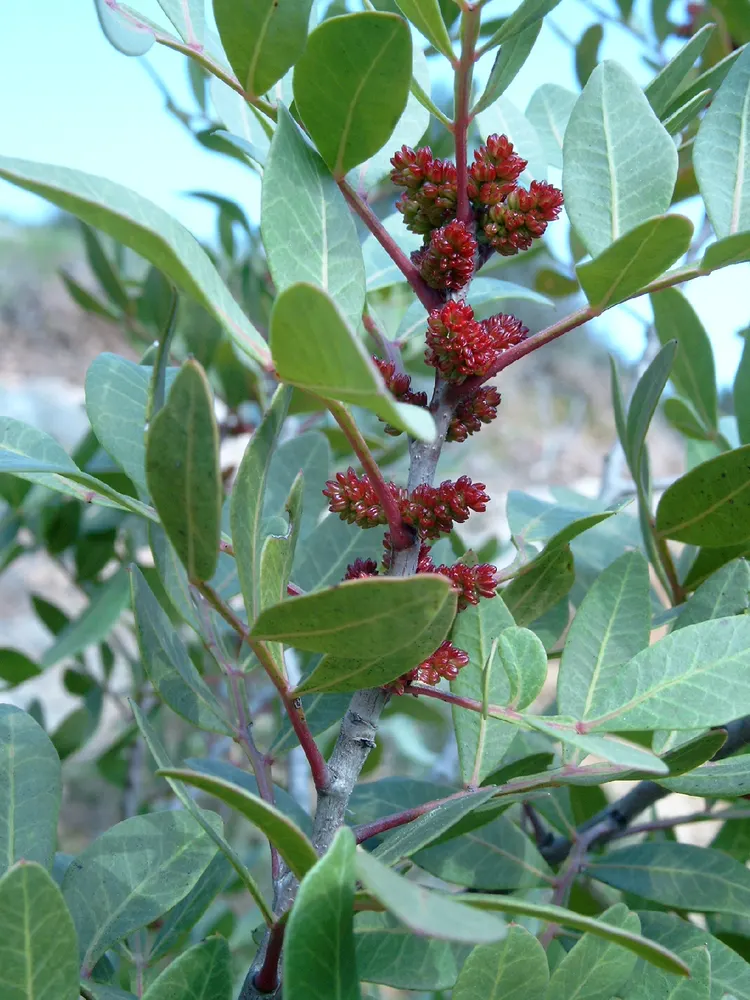
Photo: Lumbar~commonswiki, CC BY-SA 3.0 (via Wikimedia Commons)
Mastic
Pistacia lentiscus
Also known as Lentisk, Mastic Tree, Chios Mastic, Tears of Chios
Key benefits
✦Traditional uses
✦On the Greek island of Chios, mastic has been harvested and prized for thousands of years, so much so that Ottoman rulers once guarded its trade closely. Ancient Greeks and Romans chewed the hardened resin tears to sweeten the breath and calm an unsettled stomach, a habit that gave us the very word 'masticate.' Beyond the body, mastic found its way into incense, varnish, and the kitchens of the eastern Mediterranean, where it still lends its resinous, pine-like sweetness to breads, puddings, and the stretchy Turkish ice cream called dondurma.
How to grow & use it
✦The full apothecary for Mastic
Traditional remedies and step-by-step preparations, a complete growing guide, and how to harvest, dry, and store it, all unlocked with HerbLens Unlimited.
- ✦Remedies & preparations
- ✦ Growing guide
- ✦Harvest & storage
From under $6 a month. Free plant identifications always included.
- ✦Fennel
- ✦Ginger
- ✦Chamomile
- ✦Frankincense resin
- ✦Gum arabic
“When you want the clean, piney sweetness of the Aegean and a gentle old-world companion for the stomach after a heavy meal.”
Chios is the only place on Earth where mastic resin forms naturally into those clear amber tears, a quirk of soil and climate so particular that cuttings of the very same tree, planted just a few miles away on the mainland, refuse to weep the resin at all.
Mastic is well tolerated in normal culinary and traditional amounts. It belongs to the cashew family, so those with tree nut or pistachio allergies should be cautious, and it is best avoided during pregnancy and breastfeeding since safety data is limited.