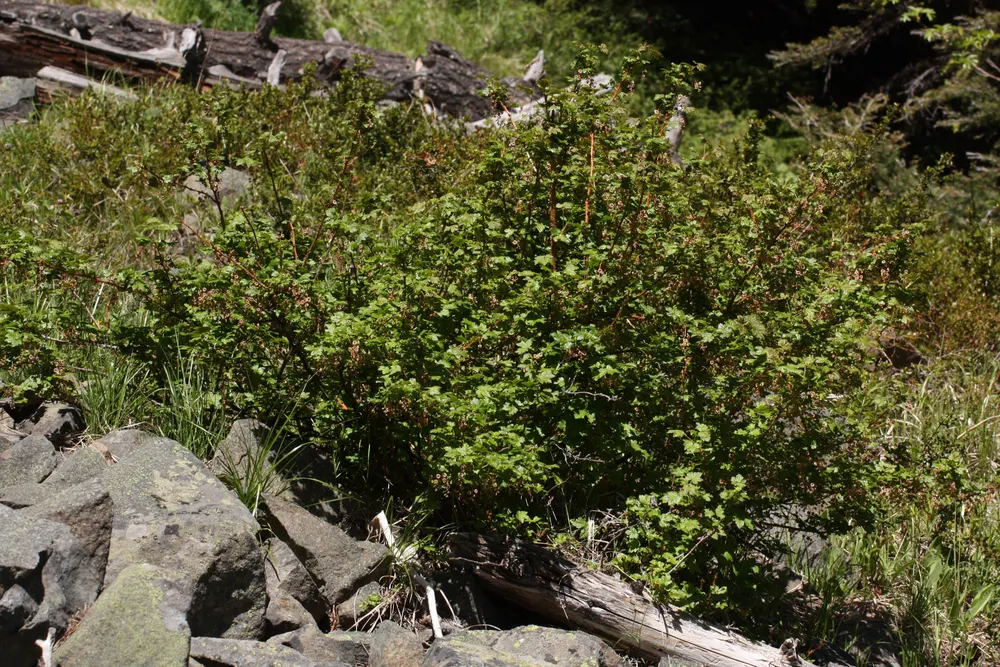
Photo: Walter Siegmund (talk), CC BY-SA 3.0 (via Wikimedia Commons)
Swamp Gooseberry
Ribes lacustre
Also known as Black swamp gooseberry, Black gooseberry, Bristly black currant, Swamp currant, Prickly currant
Key benefits
✦Traditional uses
✦Long before orchards reached the northern forests, Indigenous peoples across the Pacific Northwest, the Rocky Mountains, and the boreal north gathered the small, dark berries of the swamp gooseberry from streambanks and shady thickets. Some nations ate the fruit fresh off the bush, while others dried it into cakes or mixed it with sweeter berries like saskatoons to soften its sharp, resinous edge, storing it for the lean months of winter. The shrub was not universally prized, its glandular bristles and pungent, almost skunky smell earned it a reputation as a fruit for the patient forager, but where it was gathered it served as a steady, dependable source of food deep in the woods. Its thorny, tangled habit also made it useful as a natural hedge and windbreak along the wet ground it favors.
How to grow & use it
✦The full apothecary for Swamp Gooseberry
Traditional remedies and step-by-step preparations, a complete growing guide, and how to harvest, dry, and store it, all unlocked with HerbLens Unlimited.
- ✦Remedies & preparations
- ✦ Growing guide
- ✦Harvest & storage
From under $6 a month. Free plant identifications always included.
- ✦Saskatoon (serviceberry)
- ✦Salmonberry
- ✦Wild rose hips
- ✦Black currant (Ribes nigrum)
- ✦Golden currant (Ribes aureum)
“For the forager willing to brave a few thorns for a taste of the deep, wet northern woods.”
Crush a swamp gooseberry leaf or ripe berry between your fingers and you will catch a strong, skunky, resinous smell, which is exactly how old-time settlers came to call it stinking currant, even though that same pungency mellows away once the fruit is cooked down into jam.
Swamp gooseberry berries are generally regarded as safe to eat when fully ripe and are not documented as toxic, but the entire shrub, including the stems and the undersides of the leaves and even the berries themselves, is covered in fine bristles and sharp spines that can irritate skin, so gloves are strongly recommended when harvesting. Raw berries are tart, resinous, and carry a strong, somewhat skunky odor and flavor that some people find unpleasant or mildly upsetting to the stomach in quantity, which is why most foragers cook, dry, or sweeten them rather than eating them fresh by the handful. As with any wild-gathered plant, positively identify it before eating, only forage where it is legal and the area is unsprayed, and talk with a qualified herbalist or healthcare provider before using any wild plant medicinally, especially if you are pregnant, nursing, or taking medication.