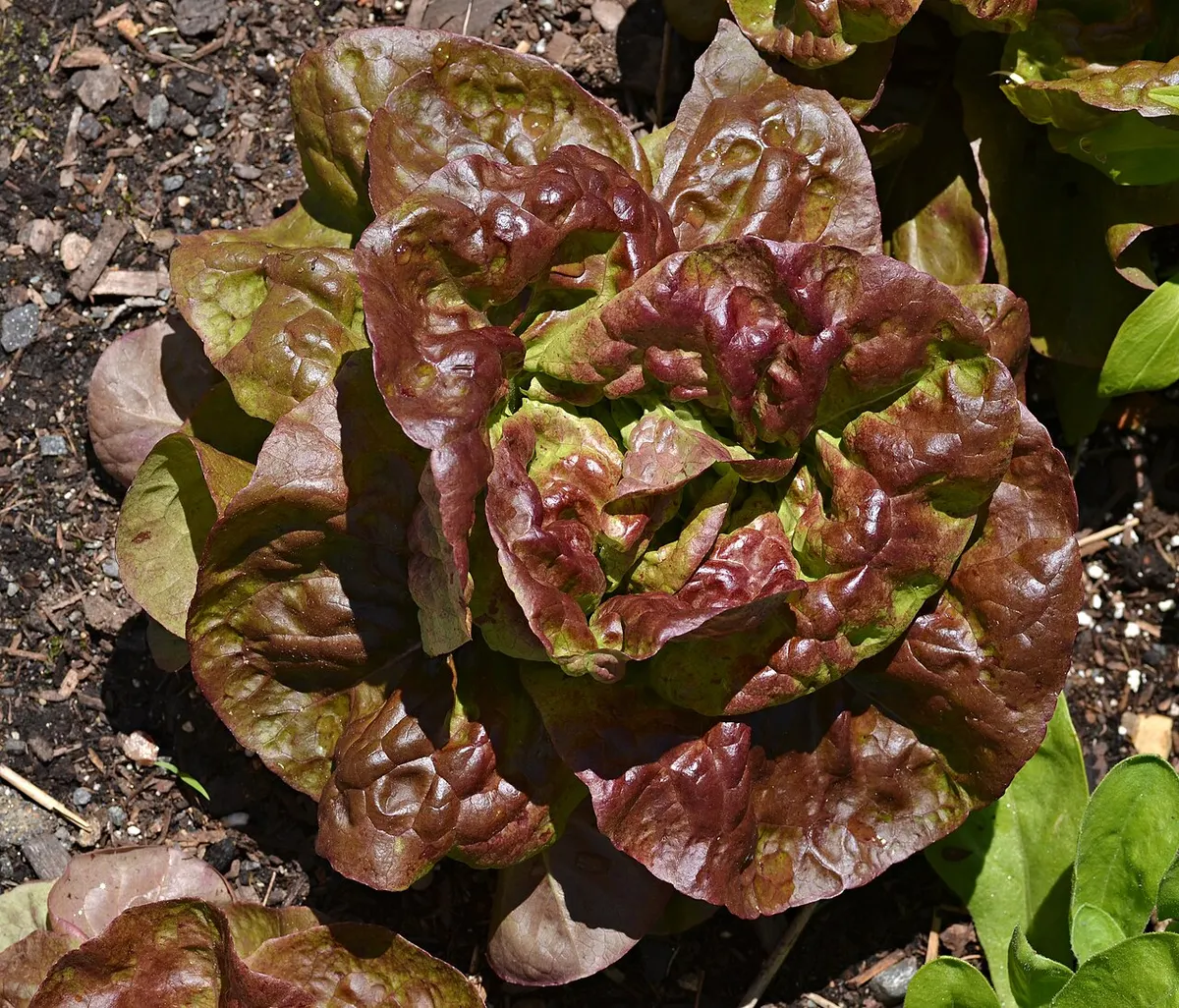
Photo: Photo by and (c)2014 Derek Ramsey (Ram-Man), GFDL 1.2 (via Wikimedia Commons)
Lettuce
Lactuca sativa
Also known as Garden Lettuce, Cultivated Lettuce
Key benefits
✦Traditional uses
✦Lettuce has been grown at the table for thousands of years, appearing in ancient Egyptian tomb paintings where it was prized as both food and a plant sacred to fertility gods. Long before it was simply a salad crop, gardeners noticed that its milky sap, released when a stem is cut or the plant bolts to flower, carried a faint soporific quality reminiscent of its wilder cousin, the opium lettuce. From this observation grew a quiet home tradition of steeping the leaves into a mild bedtime tea, sipped to ease a restless mind after a long day. Cottage gardeners and herbalists of old Europe also valued it as a cooling, easily digested food for those recovering from illness.
How to grow & use it
✦The full apothecary for Lettuce
Traditional remedies and step-by-step preparations, a complete growing guide, and how to harvest, dry, and store it, all unlocked with HerbLens Unlimited.
- ✦Remedies & preparations
- ✦ Growing guide
- ✦Harvest & storage
From under $6 a month. Free plant identifications always included.
- ✦Chamomile
- ✦Lemon Balm
- ✦Wild Lettuce (Lactuca virosa)
- ✦Chamomile
“For a quiet, dew-cool moment at the close of the day.”
The word lettuce comes from the Latin lac, meaning milk, a nod to the pale, faintly bitter sap that beads up wherever a stem or rib is cut.
Garden lettuce is a safe, everyday food. Its wild relative, wild lettuce (Lactuca virosa), is more strongly sedative and shouldn't be confused with it; use caution combining lettuce preparations with sedative medication.