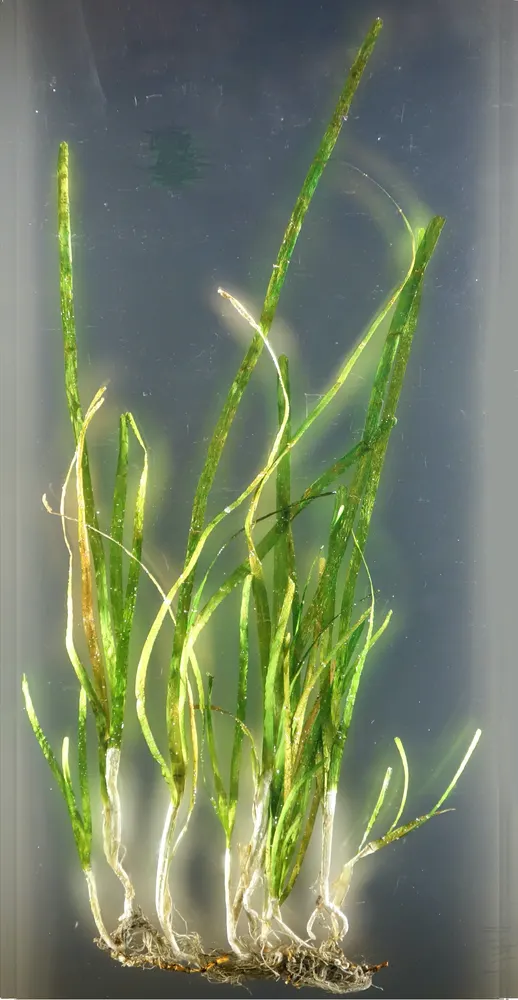
Photo: Daderot, CC0 (via Wikimedia Commons)
Eelgrass
Zostera marina
Also known as Eelgrass, Sea wrack, Grass wrack, Marine eelgrass
Key benefits
✦Traditional uses
✦Eelgrass holds a rare place in human history as the only marine flowering plant ever harvested as a grain. The Seri people of the Gulf of California gathered its ripe seed heads each spring, a wild cereal they called xnois, threshing and grinding it much like wheat or corn. Along other cold coastlines, from the Pacific Northwest to Scandinavia and Iceland, communities pulled the long dried blades from the tideline to stuff mattresses, insulate walls, thatch roofs, and pack fish for market. It was never a medicine chest herb, but a quiet, practical gift from the sea that fed, warmed, and sheltered coastal people for generations.
How to grow & use it
✦The full apothecary for Eelgrass
Traditional remedies and step-by-step preparations, a complete growing guide, and how to harvest, dry, and store it, all unlocked with HerbLens Unlimited.
- ✦Remedies & preparations
- ✦ Growing guide
- ✦Harvest & storage
From under $6 a month. Free plant identifications always included.
“For the meadows beneath the tide, where silver-green ribbons sway in the current and quietly hold a whole shoreline together.”
Eelgrass is the only marine flowering plant humans have ever harvested as a grain crop. The Seri people of the Gulf of California called its seeds xnois and gathered them as a true wild cereal, a practice found nowhere else in the world.
Eelgrass is not documented as toxic, but it is not eaten since submerged marine plants can concentrate pollutants and bacteria from the water. Anyone with a shellfish or marine allergy should be extra cautious around harvested marine plants.