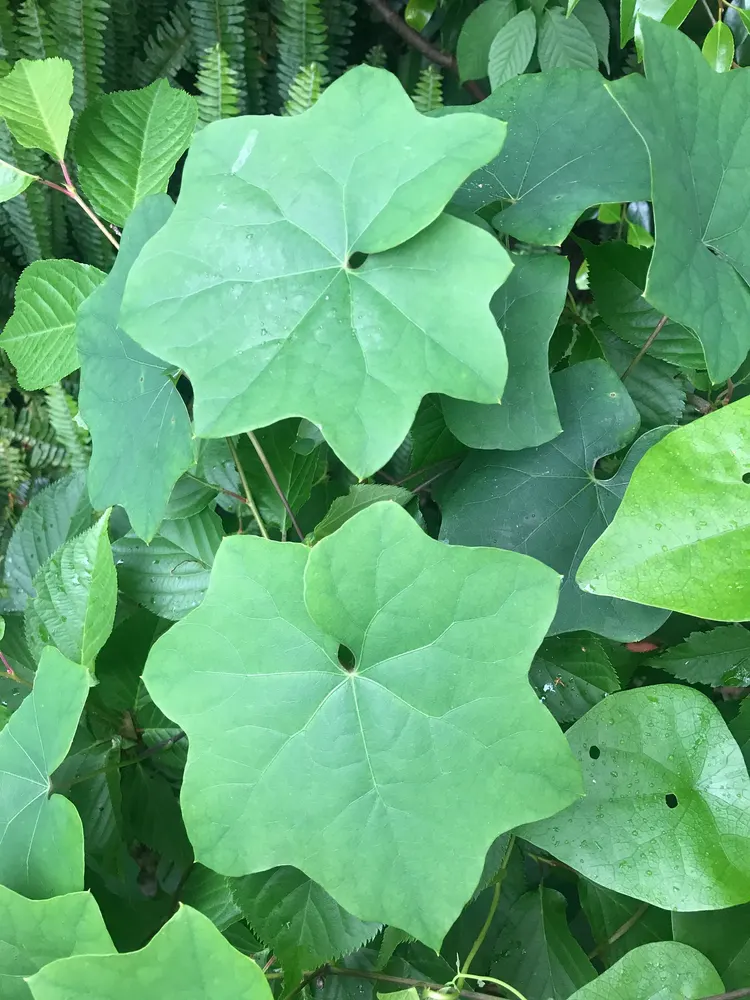
Photo: Mason Brock, CC0 (via Wikimedia Commons)
Orient Vine
Sinomenium acutum
Also known as Qing Feng Teng, Chinese Moonseed, Sinomenium, Green Wind Vine
Key benefits
✦Traditional uses
✦For centuries, healers in China, Japan, and Korea have cut the sliced, corky stems of this climbing vine into decoctions meant to chase what traditional medicine called wind-damp from the joints, the aching stiffness that settles into knees, hands, and backs with age or damp weather. It became one of the standard vine-stem herbs of the traditional Chinese pharmacy, often simmered alongside other roots and barks in formulas meant for long-standing joint and muscle complaints. In more recent generations, its principal alkaloid, sinomenine, drew the attention of researchers in China and became the basis for a licensed pharmaceutical used there for rheumatoid arthritis, a rare case of a garden vine graduating into modern medicine cabinets.
How to grow & use it
✦The full apothecary for Orient Vine
Traditional remedies and step-by-step preparations, a complete growing guide, and how to harvest, dry, and store it, all unlocked with HerbLens Unlimited.
- ✦Remedies & preparations
- ✦ Growing guide
- ✦Harvest & storage
From under $6 a month. Free plant identifications always included.
- ✦Dang Gui (Angelica sinensis) root
- ✦Gui Zhi (cinnamon twig)
- ✦Wei Ling Xian (Clematis root)
- ✦Stephania tetrandra (Han Fang Ji) root, traditionally used for similar wind-damp complaints
“For the old ache that returns with cold, damp weather, and the traditional herbalist's reach for the wind-vine remedy.”
This vine and a few of its relatives were historically traded in Chinese medicine markets under the shared nickname fang ji. That naming overlap turned dangerous in the 1990s, when the toxic, kidney-damaging Aristolochia fangchi was mistakenly substituted for safer fang ji herbs in weight-loss preparations sold in Belgium, causing serious illness. It remains a textbook cautionary tale about why sourcing herbs by verified botanical species, not folk trade names, matters so much.
This is a pharmacologically strong herb, not a mild kitchen plant, and can cause rash, stomach upset, or rare blood and immune reactions with prolonged use. Avoid in pregnancy and breastfeeding, and use caution with immunosuppressant or blood pressure medications. It has historically been mislabeled under trade names shared with toxic, kidney-damaging Aristolochia species, so correct identification from a reputable source is essential.