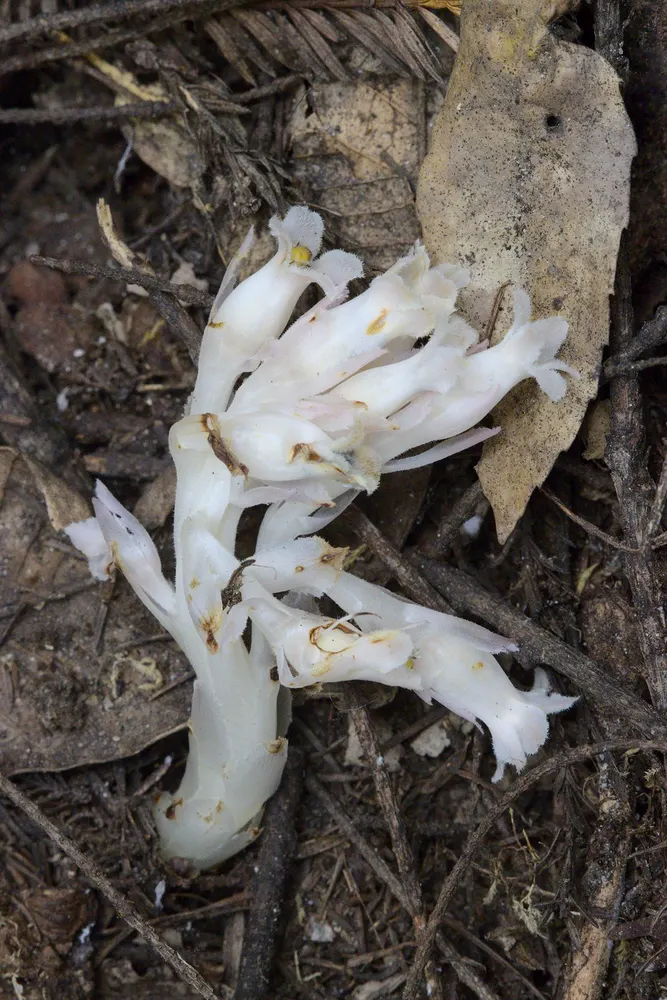
Photo: Isaac Krone, CC BY 4.0 (via Wikimedia Commons)
California Pinefoot
Pityopus californicus
Also known as Pinefoot, California pinefoot
Key benefits
✦Traditional uses
✦Pityopus californicus is one of botany's quieter oddities, a small ivory to pale yellow stalk that never bothers to photosynthesize at all. Instead of making its own food, it taps into the mycorrhizal fungal threads that lace through old conifer forests, drawing nourishment secondhand from the trees those fungi actually partner with. Because it is uncommon, easy to overlook, and offers nothing that keeps or travels well, it never found a place in the cooking pot or the medicine chest the way sturdier forest neighbors did. Its real legacy has always been with naturalists and mycologists, who treat a sighting of it as a small, quiet vote of confidence in the health of the forest floor around it.
How to grow & use it
✦The full apothecary for California Pinefoot
Traditional remedies and step-by-step preparations, a complete growing guide, and how to harvest, dry, and store it, all unlocked with HerbLens Unlimited.
- ✦Remedies & preparations
- ✦ Growing guide
- ✦Harvest & storage
From under $6 a month. Free plant identifications always included.
“For the hush of a conifer forest floor, when a pale, waxy little stalk pushes up through the duff like a secret the trees have been keeping.”
Pityopus californicus is the only species in its entire genus, and despite looking like a strange pale mushroom, it is actually flowering plant kin to blueberries and rhododendrons within the heath family, related to other ghostly forest dwellers like Indian pipe and the crimson snow plant of the Sierra Nevada.
This plant has no history of food or medicinal use and should never be eaten. It survives only through a living connection to underground fungi, so digging it up kills it almost instantly, and it is best simply admired where it grows.