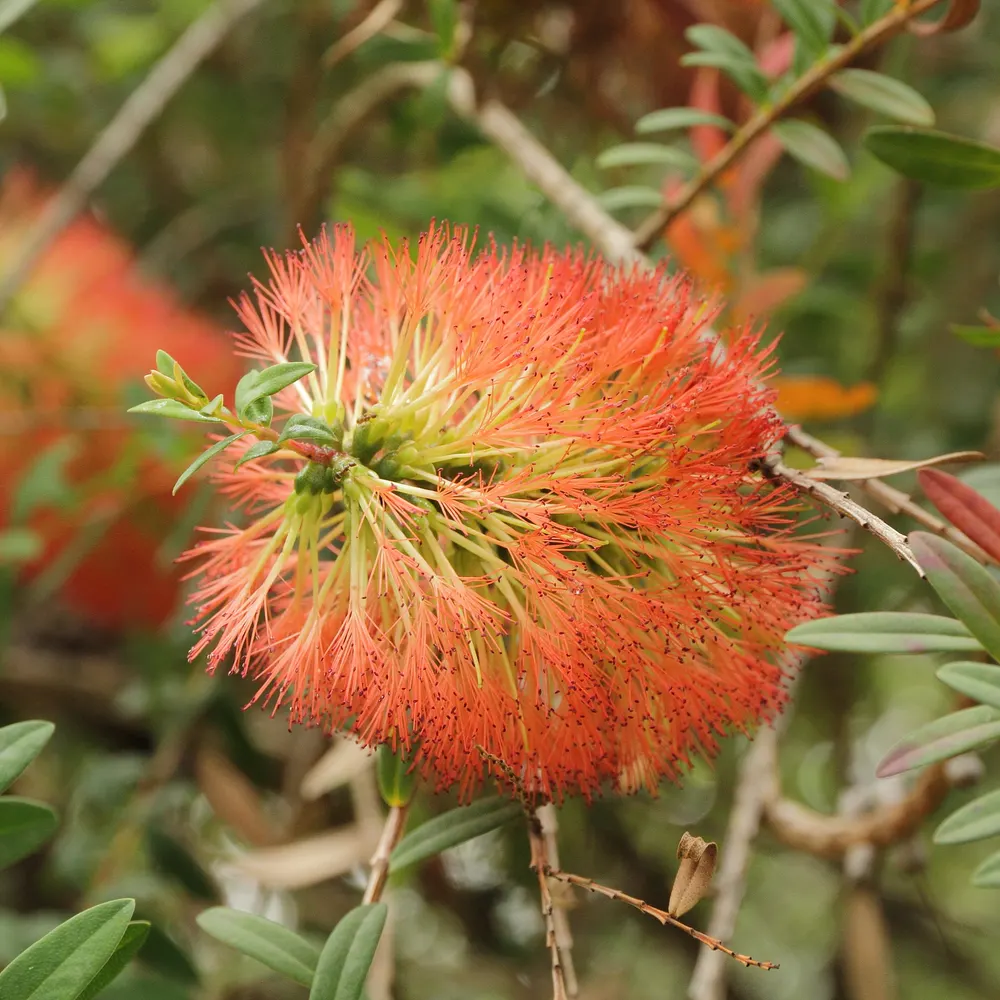
Photo: C T Johansson, CC BY-SA 3.0 (via Wikimedia Commons)
Hillock Bush
Melaleuca hypericifolia
Also known as Red-flowering Paperbark, Hillock Bush, St. John's Wort-leaved Honey-myrtle
Key benefits
✦Traditional uses
✦Melaleuca hypericifolia belongs to the same broad paperbark and honey-myrtle clan that gave the world tea tree oil, though this particular species has traditionally been valued far more for its beauty and its welcome to wildlife than for the medicine chest. Colonial-era gardeners in New South Wales prized it for the way its crimson flower spikes lit up low, swampy ground where little else would bloom, and by the twentieth century it had become a familiar anchor plant in native gardens raised for honeyeaters and other nectar feeders. Like its paperbark cousins, its thin, papery bark has long been noticed and handled by people living close to the land, though the species itself has no well-documented history as a household remedy the way tea tree or cajuput do.
How to grow & use it
✦The full apothecary for Hillock Bush
Traditional remedies and step-by-step preparations, a complete growing guide, and how to harvest, dry, and store it, all unlocked with HerbLens Unlimited.
- ✦Remedies & preparations
- ✦ Growing guide
- ✦Harvest & storage
From under $6 a month. Free plant identifications always included.
- ✦Kangaroo paw
- ✦Grevillea
- ✦Coastal banksia
- ✦Callistemon (bottlebrush)
- ✦Melaleuca linariifolia (snow-in-summer)
“For the corner of the garden that stays a little too wet and a little too wild, and could use a blaze of red the birds will find first.”
Its species name, hypericifolia, means "with leaves like Hypericum," a nod to how its small, paired leaves echo the foliage of St. John's Wort, a plant from an entirely different family on the other side of the world.
Melaleuca hypericifolia has no established history as a food or internal medicine, and it should not be treated as one. As with other Melaleuca species, essential oils and concentrated extracts from this genus are not meant to be swallowed and are known to be harmful, sometimes seriously so, to people and especially to pets like cats and dogs if ingested. The plant's main value is ornamental and ecological rather than medicinal. If you are curious about using any part of this plant beyond the garden, or if accidental ingestion occurs, speak with a qualified health professional, veterinarian, or poison control center.