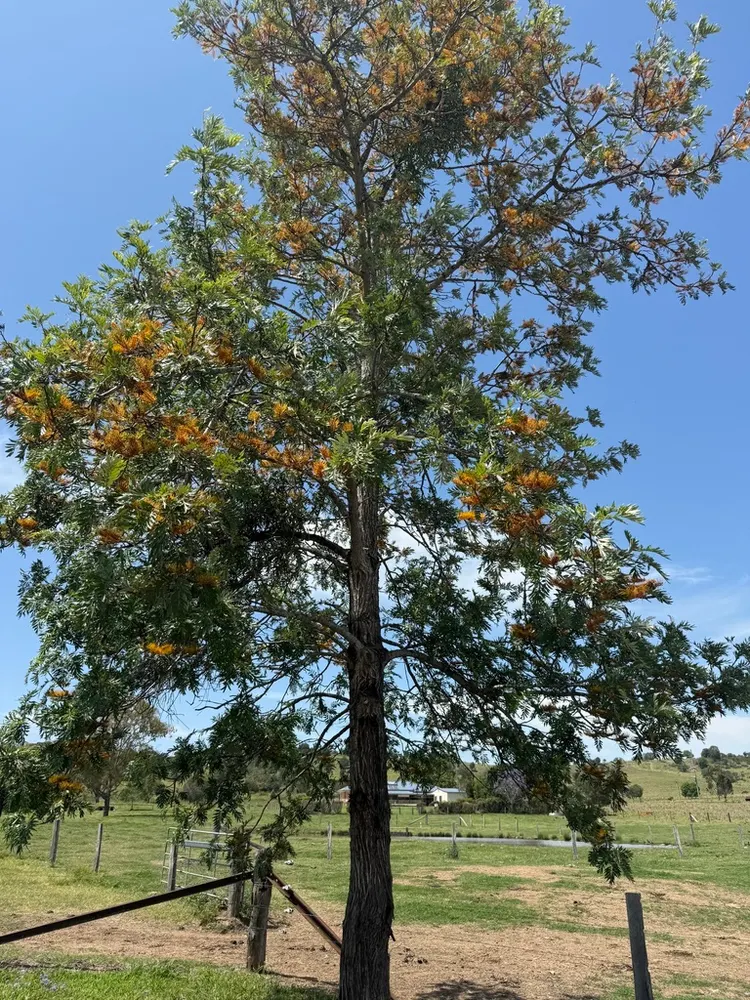
Photo: James H, CC BY 4.0 (via Wikimedia Commons)
Silky Oak
Grevillea robusta
Also known as Silver Oak, Southern Silky Oak, Australian Silver Oak
Key benefits
✦Traditional uses
✦Silky oak was never really a medicine chest plant. Its story is a working one, told in wood grain and shade rather than in teas or tinctures. Colonial furniture makers in Australia and beyond prized its warm, silky-grained timber for cabinetry, paneling, and veneer, which is exactly where the common name comes from. Growers in the highlands of East Africa, India, and Central America later adopted it by the millions as a shade tree for coffee, tea, and vanilla, since its light, high canopy lets just enough sun through for the crop beneath. In its native Australia, some Aboriginal groups are recorded soaking the nectar-rich flowers in water to make a sweet drink, a small but genuine thread of traditional bush food use.
How to grow & use it
✦The full apothecary for Silky Oak
Traditional remedies and step-by-step preparations, a complete growing guide, and how to harvest, dry, and store it, all unlocked with HerbLens Unlimited.
- ✦Remedies & preparations
- ✦ Growing guide
- ✦Harvest & storage
From under $6 a month. Free plant identifications always included.
- ✦Coffee
- ✦Tea
- ✦Vanilla
- ✦Jacaranda
- ✦Macadamia
“For the garden that wants fast, feathery shade overhead and a spill of amber blossom against the sky.”
Despite the name and its oak-like wood grain, silky oak is not an oak at all. It belongs to the Proteaceae family and is a far closer cousin to macadamia and banksia than to any true oak.
Silky Oak sap and sawdust are a well-known cause of allergic contact dermatitis; it is not eaten or brewed as a tea.