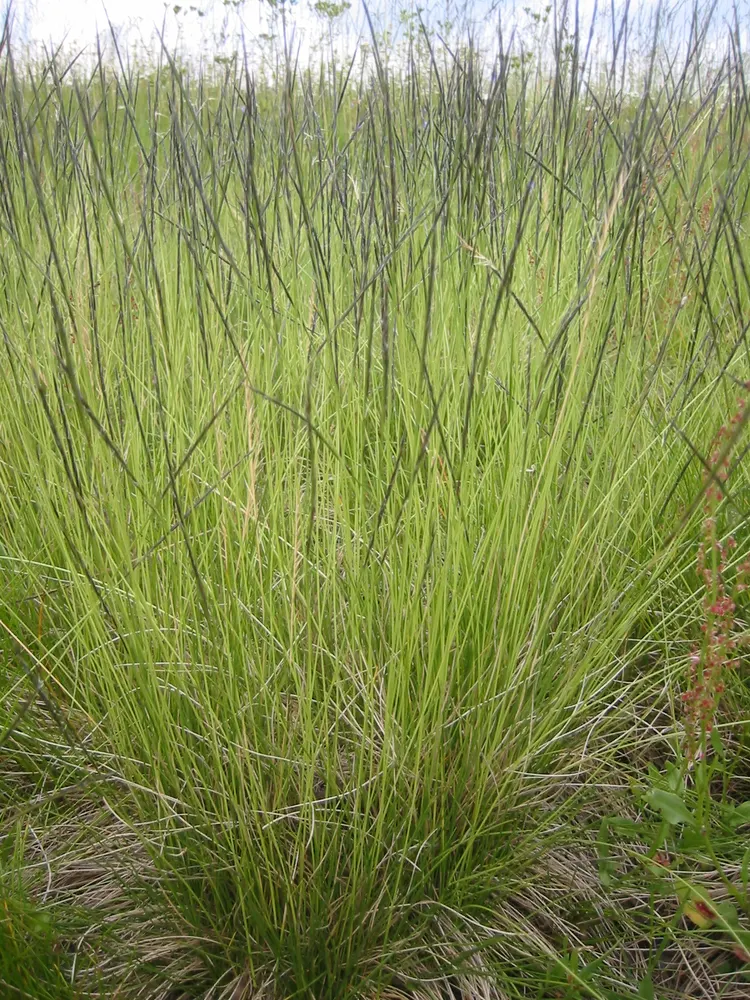
Photo: Conny, CC BY-SA 3.0 (via Wikimedia Commons)
Mat Grass
Nardus stricta
Also known as Moor Mat-grass, White Bent, Nard Grass
Key benefits
✦Traditional uses
✦Mat-grass never earned a place in the still-room or the kitchen garden, but it holds a real place in the story of hill farming. For generations, shepherds and graziers on the upland moors of Britain and northern Europe learned to read its tough, bristly tussocks as a warning sign, a patch of Nardus stricta spreading across a pasture meant the sweeter grasses had already been grazed away and the flock needed to move on. Its very toughness, prized by no one for eating, became a kind of quiet folk instrument for judging the health of the land. Botanists still use it the same way today, as a telltale marker of acidic, nutrient-poor, or overgrazed ground.
How to grow & use it
✦The full apothecary for Mat Grass
Traditional remedies and step-by-step preparations, a complete growing guide, and how to harvest, dry, and store it, all unlocked with HerbLens Unlimited.
- ✦Remedies & preparations
- ✦ Growing guide
- ✦Harvest & storage
From under $6 a month. Free plant identifications always included.
- ✦Heather
- ✦Bilberry
- ✦Purple moor-grass
- ✦Sheep's fescue
- ✦Purple moor-grass
“When the ground is thin, the wind won't let up, and nothing soft will take hold, mat-grass is already there, holding on.”
The genus name Nardus was borrowed from spikenard, the fragrant, costly plant of the ancient world, simply because early botanists thought the narrow, tufted leaves looked similar. Mat-grass has no scent to speak of and is not related to true nard at all, it just inherited a beautiful name for a plant that grows on some of the bleakest ground in Europe.
Mat grass is not toxic and has no history of medicinal use; livestock simply avoid its tough, wiry leaves because they are low in nutrition, not because it is poisonous.