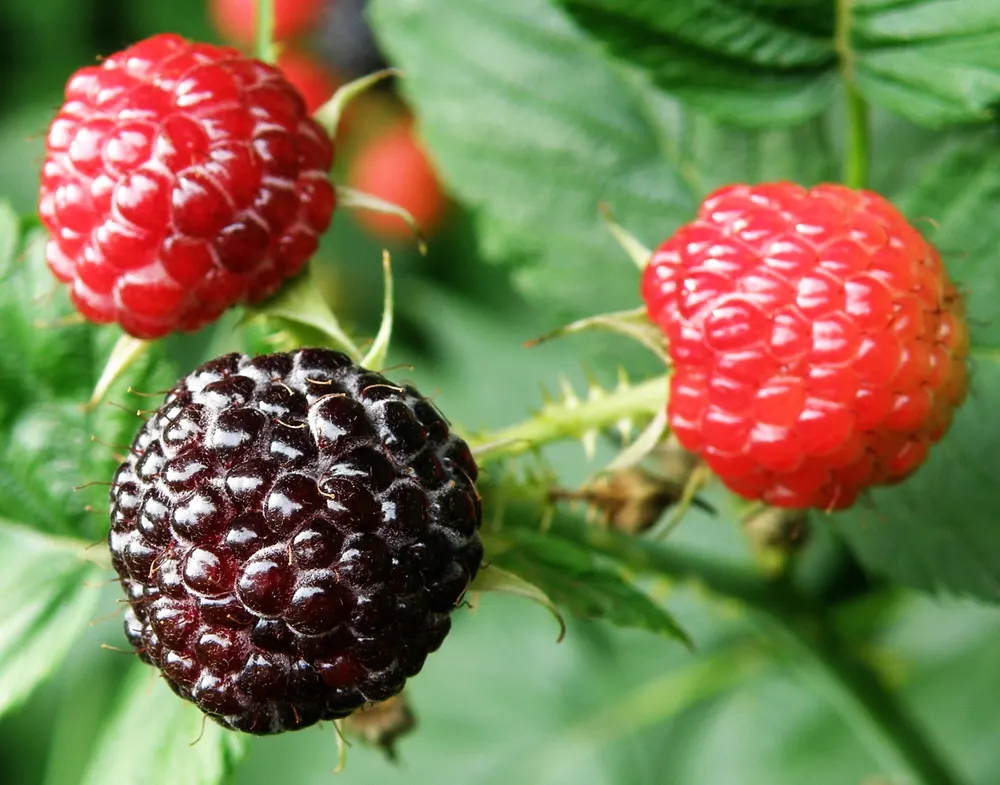
Photo: Alina Zienowicz Ala z, CC BY-SA 3.0 (via Wikimedia Commons)
Black Raspberry
Rubus occidentalis
Also known as Blackcap raspberry, Blackcap, Thimbleberry
Key benefits
✦Traditional uses
✦Long before it was cultivated, black raspberry grew wild along the woodland margins of eastern North America, where Indigenous peoples gathered the deep purple fruit each midsummer and dried it for winter stores. The leaves, gently astringent and rich in tannins, were traditionally steeped into a simple tea used to settle an upset stomach and calm mild diarrhea, much as red raspberry leaf has long been used. Early settlers adopted the same habits, folding black raspberries into jams, syrups, and cordials while keeping a jar of dried leaf on hand as a humble household remedy. Its dark, almost inky juice has also served for generations as a natural dye and flavoring in home kitchens.
How to grow & use it
✦The full apothecary for Black Raspberry
Traditional remedies and step-by-step preparations, a complete growing guide, and how to harvest, dry, and store it, all unlocked with HerbLens Unlimited.
- ✦Remedies & preparations
- ✦ Growing guide
- ✦Harvest & storage
From under $6 a month. Free plant identifications always included.
- ✦Peppermint
- ✦Red raspberry leaf
- ✦Hibiscus
- ✦Red raspberry leaf (Rubus idaeus)
- ✦Blackberry leaf (Rubus fruticosus)
“For a wild, jewel-dark berry that tastes like the height of summer, and a gently astringent tea to steady an unsettled stomach.”
Black raspberries earned the old country name blackcap because the ripe berry pulls free of its pale, thimble-shaped core and leaves it behind on the cane, a trick no blackberry ever performs, since a blackberry's core comes away with the fruit.
Black raspberry fruit is a safe, well-tolerated food. The leaf is more astringent and, like red raspberry leaf, is traditionally used cautiously in pregnancy and spaced apart from iron supplements.