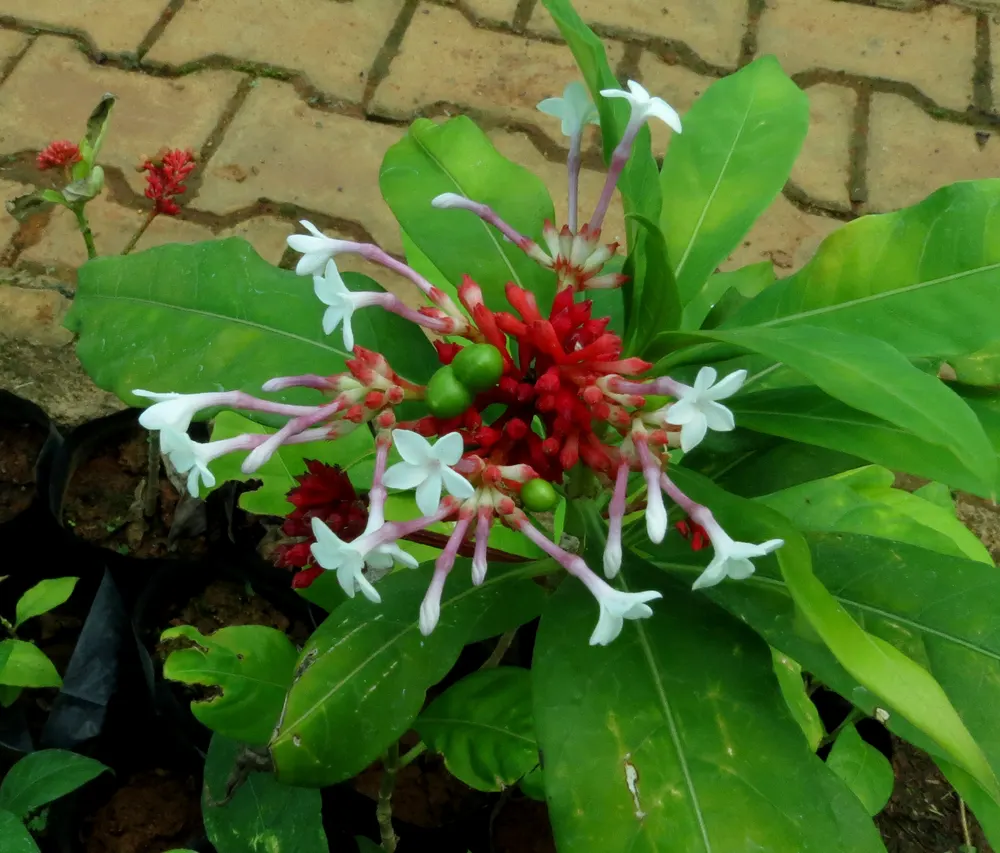
Photo: Forestowlet, CC0 (via Wikimedia Commons)
Indian Snakeroot
Rauvolfia serpentina
Also known as Sarpagandha, Serpentine Root, Rauwolfia, Devil Pepper, Chandra
Traditional uses
✦Long before it entered Western pharmacology, Rauvolfia serpentina held a deep place in Ayurvedic medicine, where healers called it sarpagandha and turned to its gnarled, twisting root for calming the mind and steadying a racing pulse. Its snake-like root shape gave rise to old folk beliefs that it could counter snakebite, and the plant's name itself, serpentina, echoes that root's coiling form. In the mid twentieth century, Western researchers isolated the alkaloid reserpine from this root, and for a time it became one of the first widely used treatments for high blood pressure and certain mental health conditions, a striking example of a village remedy reshaping modern medicine. That very potency, however, is why this is a plant to admire and study rather than one to prepare at home.
How to grow & use it
✦The full apothecary for Indian Snakeroot
Traditional remedies and step-by-step preparations, a complete growing guide, and how to harvest, dry, and store it, all unlocked with HerbLens Unlimited.
- ✦Remedies & preparations
- ✦ Growing guide
- ✦Harvest & storage
From under $6 a month. Free plant identifications always included.
- ✦Hawthorn (for traditional heart and circulation support, under guidance)
- ✦Valerian (for traditional calming support, under guidance)
“A root that reshaped modern medicine, best left to those who know its power.”
Reserpine, the alkaloid drawn from this root, was so influential when it reached Western medicine in the 1950s that some historians credit it with helping launch the entire modern era of psychiatric pharmacology.
Rauvolfia serpentina is a potent, pharmacologically active plant, not a kitchen or home-apothecary herb. Its alkaloids, especially reserpine, can cause severe and dangerous drops in blood pressure, marked sedation, slowed heart rate, and have been linked to serious depression and suicidal thoughts with prolonged use. It interacts dangerously with antidepressants (including MAOIs), other blood pressure medications, digoxin, and various psychiatric drugs. It is not safe during pregnancy or breastfeeding and is inappropriate for children. Any use of this plant or its derivatives should occur only as a prescribed pharmaceutical product under the direct supervision of a licensed physician, never as a self-prepared tea, tincture, or supplement.