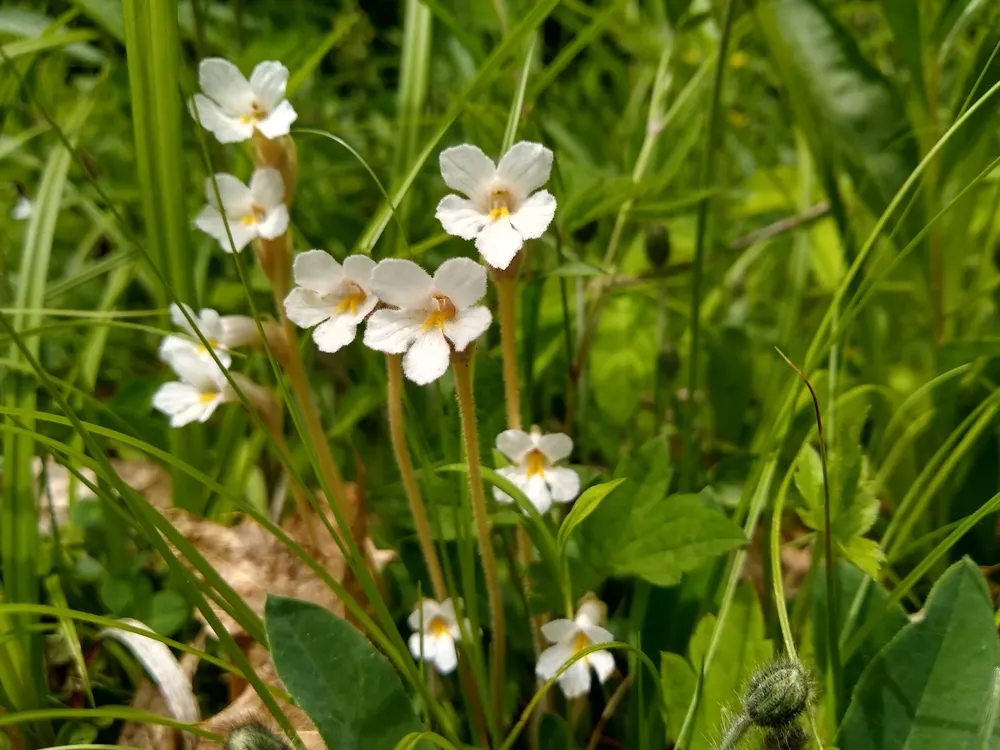
Photo: River Bissonnette, CC BY-SA 4.0 (via Wikimedia Commons)
One-flowered Broomrape
Orobanche uniflora
Also known as Naked Broomrape, One-flowered Cancer-root, Ghost Pipe Broomrape
Key benefits
✦Traditional uses
✦Orobanche uniflora has long fascinated botanists and wildflower hunters more for its strange biology than for any place in the herbal medicine chest. Early European settlers, watching broomrapes overtake garden and field plants abroad, carried over the old English name for the group after a parasitic relative known to strangle broom shrubs across the Atlantic. Some of its Orobanchaceae cousins earned the folk name cancer-root for their pale, leafless clusters pushing up from bare soil, and while that name sometimes attached loosely to this species too, no reliable tradition of using Orobanche uniflora as food or medicine has come down to us. Its real legacy lives in natural history rather than the apothecary, a small, ghostly reminder that not every wildflower's story ends in a remedy.
How to grow & use it
✦The full apothecary for One-flowered Broomrape
Traditional remedies and step-by-step preparations, a complete growing guide, and how to harvest, dry, and store it, all unlocked with HerbLens Unlimited.
- ✦Remedies & preparations
- ✦ Growing guide
- ✦Harvest & storage
From under $6 a month. Free plant identifications always included.
“Look low along the mossy woodland floor in early spring, for one pale, ghostly flower nodding where no green leaf grows.”
Because it has no chlorophyll at all, Orobanche uniflora cannot photosynthesize like an ordinary wildflower. It survives entirely by tapping into the roots of nearby plants through a specialized organ called a haustorium, living more like a quiet, patient thief than a typical flower.
This wildflower has no established history of culinary or medicinal use and should not be eaten. Digging it up also kills the host plant it parasitizes, so it is best left undisturbed and admired in place.