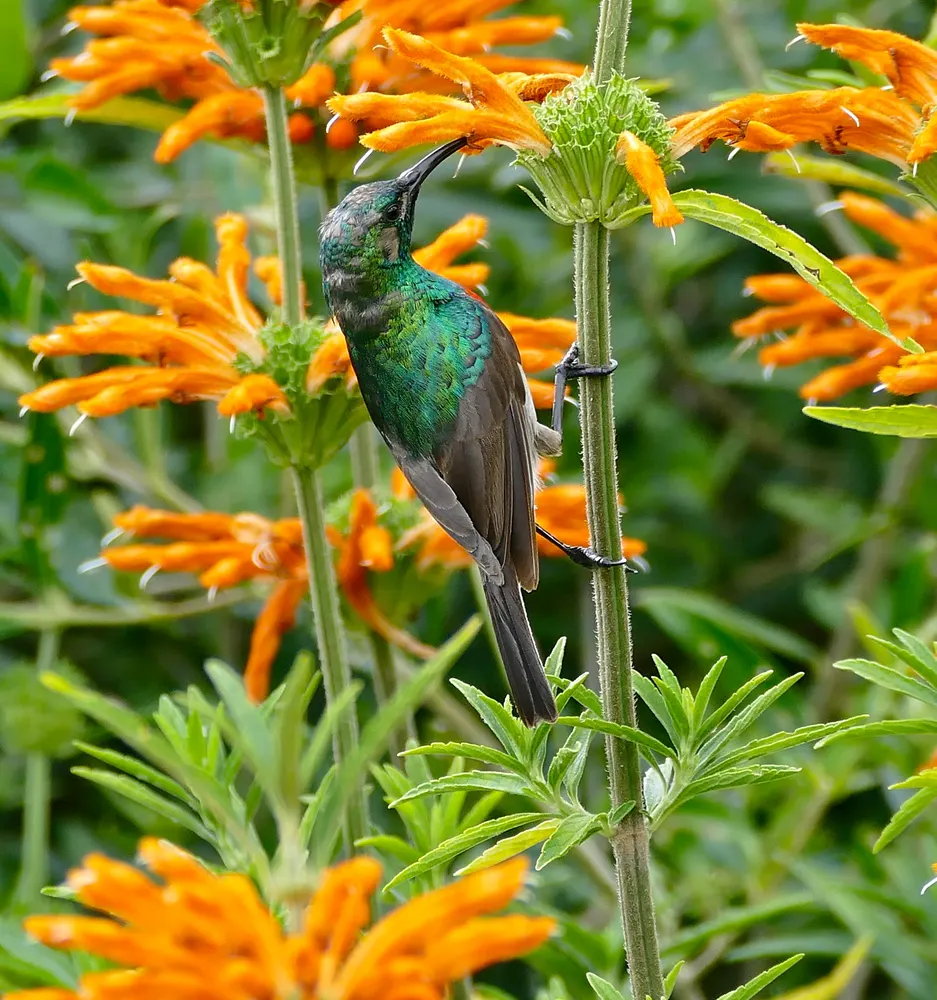
Photo: Bernard DUPONT from FRANCE, CC BY-SA 2.0 (via Wikimedia Commons)
Wild Dagga
Leonotis leonurus
Also known as Lion's Tail, Lion's Ear, Minaret Flower, Wilde Dagga
Key benefits
✦Traditional uses
✦In its native South Africa, wild dagga has long held a place in Khoikhoi and Xhosa folk medicine, where the leaves and flowers were traditionally brewed or applied for coughs, headaches, fevers, and skin troubles, and the plant was even kept close as a folk remedy for snakebite in the countryside. Its Afrikaans name, dagga, ties it to cannabis, because rural communities traditionally dried and smoked the leaves as a milder, legal substitute when the real thing was scarce or forbidden. That history has followed the plant well past its home range, and today it is better known in most of the world as a dramatic garden shrub than as a household remedy. Because of its psychoactive reputation and the thin research behind it, HerbLens treats wild dagga as a plant to admire and grow rather than one to prepare and take.
How to grow & use it
✦The full apothecary for Wild Dagga
Traditional remedies and step-by-step preparations, a complete growing guide, and how to harvest, dry, and store it, all unlocked with HerbLens Unlimited.
- ✦Remedies & preparations
- ✦ Growing guide
- ✦Harvest & storage
From under $6 a month. Free plant identifications always included.
- ✦Salvia leucantha (Mexican bush sage)
- ✦Pentas lanceolata
- ✦Buddleja (butterfly bush)
- ✦Leonotis nepetifolia (klip dagga), a close annual relative with similar orange whorled blooms
“For the gardener who wants a blaze of orange that hums with bees and sunbirds from midsummer into fall.”
The tufted orange flower whorls, stacked like tiny flames up a tall stem, are exactly what earned this plant its common name lion's tail, and sunbirds in South Africa are famously drawn to them, hovering to sip nectar from each blossom in turn.
Wild dagga is traditionally dried and smoked for mild psychoactive effects, and its legal status varies by location. Safety and dosing research is thin, so it should be avoided in pregnancy and breastfeeding and kept away from children and pets.