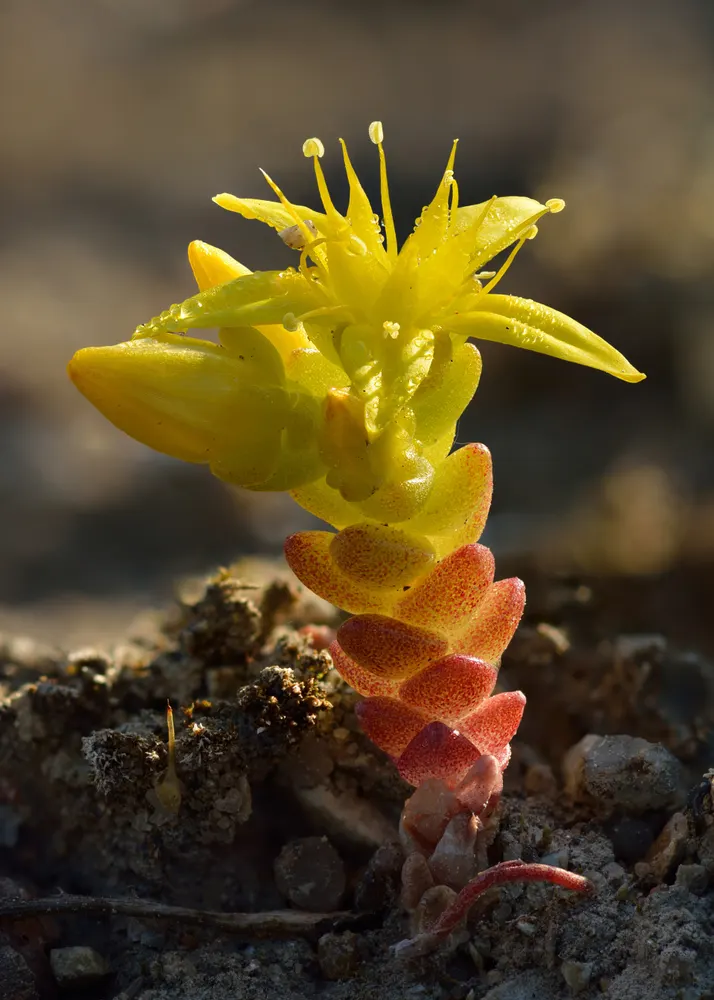
Photo: Ivar Leidus, CC BY-SA 4.0 (via Wikimedia Commons)
Wallpepper
Sedum acre
Also known as Biting Stonecrop, Goldmoss Stonecrop, Mossy Stonecrop, Gold Moss Sedum
Key benefits
✦Traditional uses
✦Wallpepper earned its name honestly: nibble a leaf and the sharp, peppery bite explains both the common name and the species name acre, Latin for sharp or acrid. Old European herbals record it being used sparingly and externally in folk practice, most often dabbed onto warts and corns, though herbalists of the time also warned that the plant was harsh and not to be trifled with. In cottage gardens it was prized less as medicine and more as a tough, cheerful little survivor, planted along stone walls and dry banks where almost nothing else would take hold. Its true legacy today is as one of the most reliable, low-maintenance groundcovers a gardener can grow.
How to grow & use it
✦The full apothecary for Wallpepper
Traditional remedies and step-by-step preparations, a complete growing guide, and how to harvest, dry, and store it, all unlocked with HerbLens Unlimited.
- ✦Remedies & preparations
- ✦ Growing guide
- ✦Harvest & storage
From under $6 a month. Free plant identifications always included.
- ✦Sempervivum (houseleek)
- ✦Creeping thyme
- ✦Other low-growing sedums
- ✦Houseleek (Sempervivum tectorum) for similar rock garden and roof planting
“For a golden carpet that shrugs off drought, drapes over stone, and asks for nothing but sun.”
In parts of Wales and rural Europe, wallpepper and its cousin the houseleek were once tucked into thatched roofs and stone walls in the folk belief that their fireproof-looking, water-plumped leaves would protect the home from lightning strikes.
Every part of wallpepper contains irritant compounds that can inflame the mouth and stomach, causing nausea and vomiting if eaten, and the sap can irritate sensitive skin. It is also toxic to dogs, cats, and horses, so keep pets and grazing animals away, and it should never be used internally as a home remedy.