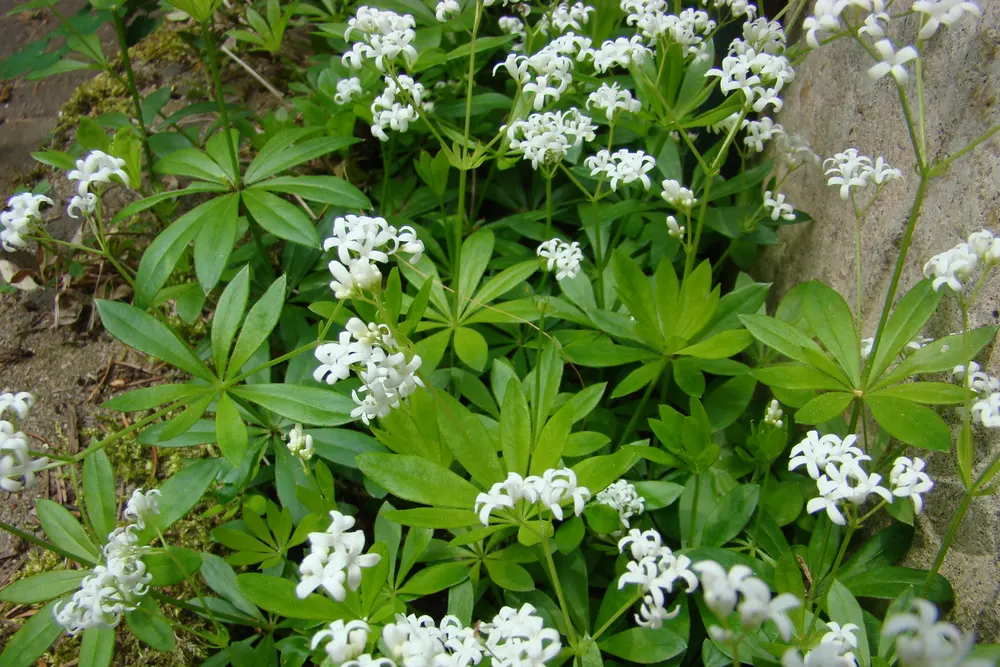
Photo: Hajotthu 13:34, 11. Mai 2009 (CEST), CC BY-SA 3.0 (via Wikimedia Commons)
Sweet Woodruff
Galium odoratum
Also known as Woodruff, Maywine Herb, Wild Baby's Breath, Master of the Woods, Asperula odorata
Key benefits
✦Traditional uses
✦Sweet woodruff has been treasured in European folk life for centuries, most famously as the herb that flavors Maibowle, the German May wine drunk to welcome spring. Long before that, households strewed the dried herb across floors and tucked it into linen chests and pillows, prizing the fresh-cut hay scent that only appears once the leaves begin to wilt. In old countryside herbalism, a light tea was traditionally sipped in the evening for its gentle, settling quality, and to ease a restless stomach after a heavy meal. It grew easily at the edges of forests, so it was as much a familiar dooryard plant as a gathered one.
How to grow & use it
✦The full apothecary for Sweet Woodruff
Traditional remedies and step-by-step preparations, a complete growing guide, and how to harvest, dry, and store it, all unlocked with HerbLens Unlimited.
- ✦Remedies & preparations
- ✦ Growing guide
- ✦Harvest & storage
From under $6 a month. Free plant identifications always included.
- ✦Elderflower
- ✦Lemon Balm
- ✦Chamomile
- ✦Sweet clover (Melilotus)
- ✦Sweetgrass
“For a spring evening that should smell like new-mown hay and an old wine cellar.”
Fresh sweet woodruff barely smells of anything at all. Its signature sweet, new-mown-hay fragrance comes from coumarin, which is locked away in the living leaf and only released as the plant wilts and dries, which is exactly why old households always let it wither a day before tucking it into linens or steeping it in spring wine.
Sweet woodruff contains coumarin, which in large amounts can strain the liver and may intensify blood thinners like warfarin, so it's used only lightly and briefly, not as a daily tea.