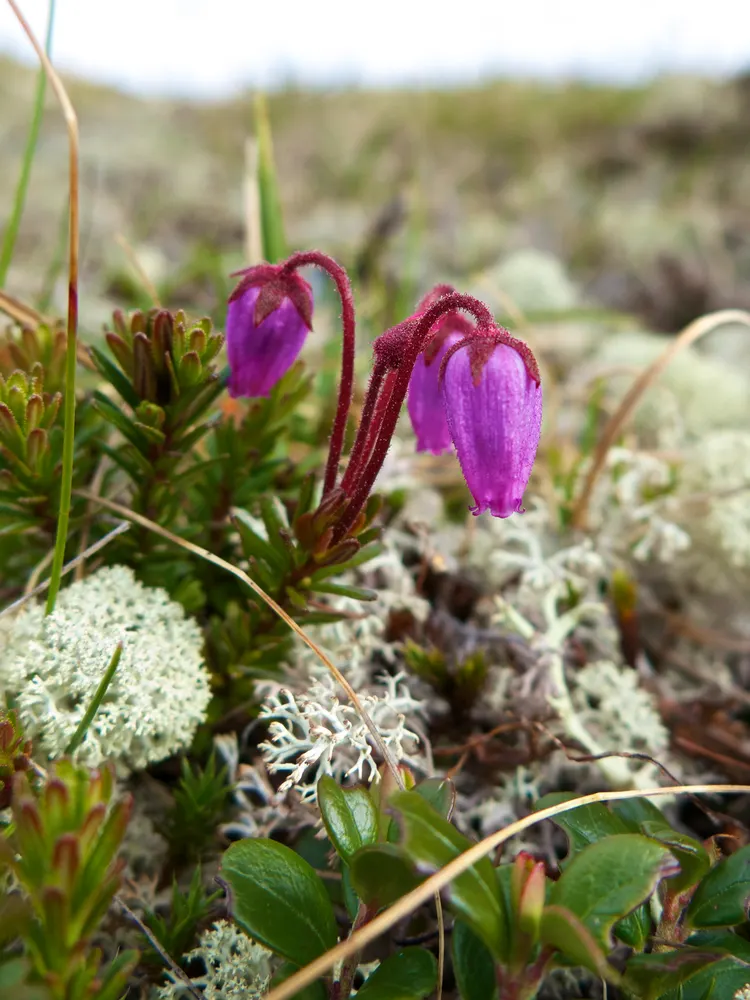
Photo: Jörg Hempel, CC BY-SA 3.0 de (via Wikimedia Commons)
Blue Mountain Heath
Phyllodoce caerulea
Also known as Blue Heath, Purple Mountain Heath, Mountain Heath
Key benefits
✦Traditional uses
✦Blue mountain heath has never been a kitchen or medicine chest herb. Its story is one of rarity and quiet devotion rather than remedy: it is one of the scarcest native plants in the British Isles, clinging to a handful of wind-scoured Highland summits, and generations of botanists and hillwalkers have made long, cold pilgrimages just to see its small bells nodding in the mist. Where it is more common, across the Arctic tundra of Scandinavia, Russia, and far northern North America, it has been valued simply as a sign of healthy, undisturbed alpine ground. Its charm has always been that of a jewel to admire on the mountainside or nurture in a trough garden, not a plant to gather.
How to grow & use it
✦The full apothecary for Blue Mountain Heath
Traditional remedies and step-by-step preparations, a complete growing guide, and how to harvest, dry, and store it, all unlocked with HerbLens Unlimited.
- ✦Remedies & preparations
- ✦ Growing guide
- ✦Harvest & storage
From under $6 a month. Free plant identifications always included.
- ✦Alpine azalea (Loiseleuria procumbens)
- ✦Cassiope species
- ✦Lingonberry (Vaccinium vitis-idaea)
- ✦Loiseleuria procumbens (Alpine azalea)
- ✦Cassiope lycopodioides
“For a touch of arctic tundra magic, tucked into a cold, damp corner of the rock garden.”
In Britain, blue mountain heath is so rare that it grows wild on only a small cluster of Highland mountains, and for over two centuries plant lovers have hiked into raw, cloud-wrapped terrain hoping for just a glimpse of its nodding pink-purple bells.
This heath has no history as food or medicine and isn't eaten. It's also a legally protected, nationally rare wildflower in the UK, so any garden specimen should come from nursery stock, not the wild.