Photo: Choess, CC BY-SA 3.0 (via Wikimedia Commons)
Bog Asphodel
Narthecium americanum
Also known as American bog asphodel, New Jersey bog asphodel
Key benefits
✦Traditional uses
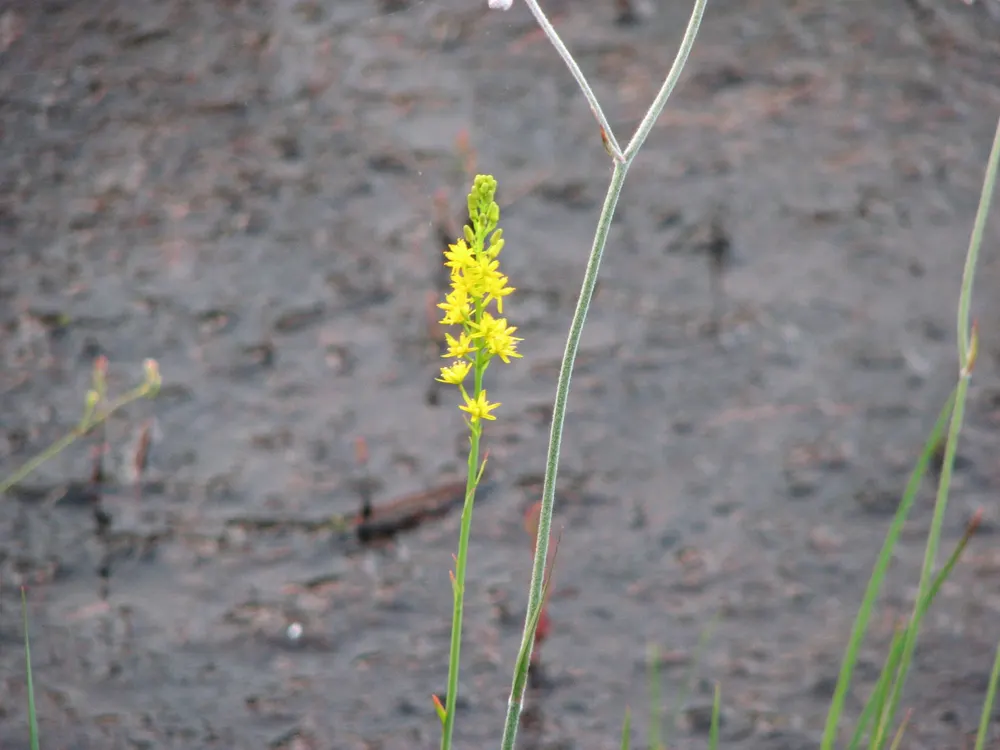
✦Bog asphodel does not carry a folk-medicine or kitchen history the way many herbs in this atlas do. It is, instead, a plant whose story is written in rarity: a small, golden-flowered relative of the Old World bog asphodels, found almost nowhere on earth outside the acid bogs of the New Jersey Pine Barrens and a handful of neighboring sites. Botanists have watched over it since the nineteenth century as a marker of pristine, undrained wetland, the kind of ground that tells you a bog has never been ditched or filled. Its charm has always been in the finding of it, a spray of tiny yellow stars rising from sphagnum moss, rather than in any basket or teapot.
How to grow & use it
✦The full apothecary for Bog Asphodel
Traditional remedies and step-by-step preparations, a complete growing guide, and how to harvest, dry, and store it, all unlocked with HerbLens Unlimited.
- ✦Remedies & preparations
- ✦ Growing guide
- ✦Harvest & storage
From under $6 a month. Free plant identifications always included.
- ✦Round-leaved sundew (in a bog garden setting)
- ✦Purple pitcher plant (in a bog garden setting)
- ✦Cranberry (in a bog garden setting)
- ✦None established. This species has no herbal tradition to stand in for; it is grown and admired for its own sake, not as a substitute for another remedy plant.
“When you find a patch of gold-starred bog asphodel, you have found ground worth protecting.”
The genus name Narthecium is shared with the European bog asphodel, Narthecium ossifragum, whose old species name means bone-breaker. Highland shepherds once blamed the plant for weakening the leg bones of grazing sheep, though the real culprit was the calcium-poor bog soil the plant simply happened to thrive in. The American species inherited the family name, but not the folklore, since it grows in far too small and scattered a range to have ever crossed paths with livestock at scale.
Bog asphodel has no history of human food or medicinal use, and its close relative is known to poison grazing sheep and cattle. It is also globally rare and protected in its native New Jersey Pine Barrens habitat, so it should never be picked or eaten.