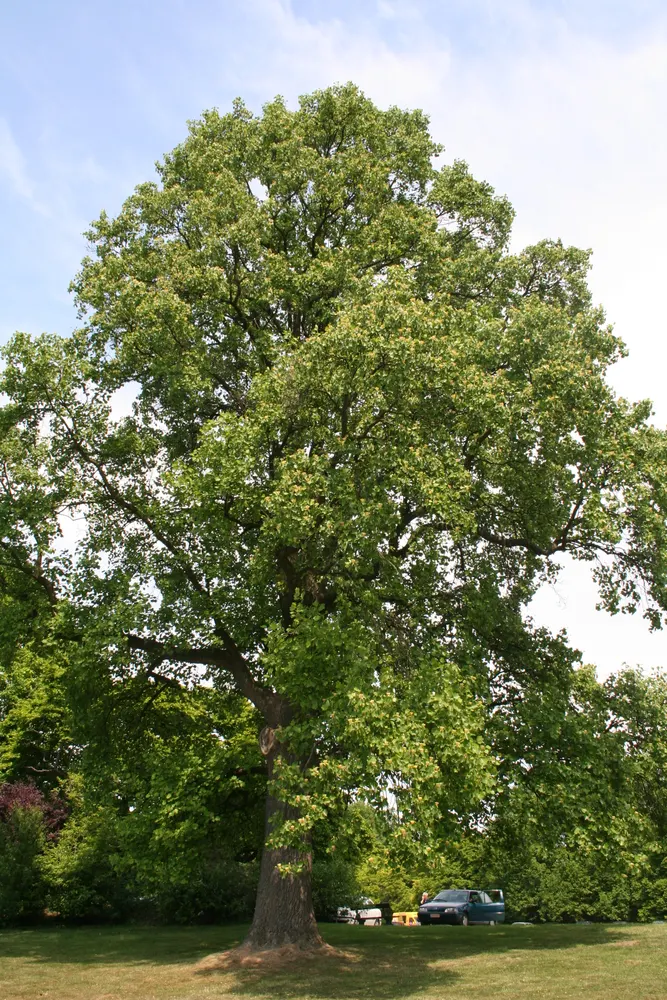
Photo: Jean-Pol GRANDMONT, CC BY 3.0 (via Wikimedia Commons)
Tulip Tree
Liriodendron tulipifera
Also known as Tulip Poplar, Yellow Poplar, Whitewood, Fiddletree
Key benefits
✦Traditional uses
✦Long before it was prized for its towering timber, the tulip tree's bark was steeped and simmered by Cherokee, Delaware, and other Eastern Woodland peoples as a bitter, warming tonic for fevers, indigestion, and the aches of rheumatism. When colonial settlers arrived, they adopted the same bark as a homegrown substitute for costly imported Peruvian bark, brewing it into decoctions for seasonal fevers and low spirits. By the nineteenth century, Eclectic physicians had made tulip tree bark a fixture of their apothecary shelves, praising it as a gentle stimulant tonic that seemed to rouse a sluggish appetite and steady a weary constitution. Though it has since faded from common use, its story remains woven into the roots of early American herbal medicine.
How to grow & use it
✦The full apothecary for Tulip Tree
Traditional remedies and step-by-step preparations, a complete growing guide, and how to harvest, dry, and store it, all unlocked with HerbLens Unlimited.
- ✦Remedies & preparations
- ✦ Growing guide
- ✦Harvest & storage
From under $6 a month. Free plant identifications always included.
- ✦Ginger
- ✦Boneset
- ✦Chamomile
- ✦Cinchona (quinine) bark
- ✦Wild cherry bark
“Reach for tulip tree bark when a cold settles in and you want the old bitter-bark warmth once trusted long before quinine was easy to come by.”
Despite its common name, the tulip tree isn't related to poplars at all, it's actually a cousin of the magnolia, and its leaf shape and tulip-like blossoms belong to one of the most ancient lineages of flowering trees, with fossil relatives dating back more than 100 million years.
Tulip tree bark has a traditional history as a bitter tonic, but excessive use has been linked to nausea and a mild stimulant effect on the heart, so anyone with a cardiac condition should be cautious. The bark and wilted leaves are toxic to horses and other livestock, and it is best avoided during pregnancy.