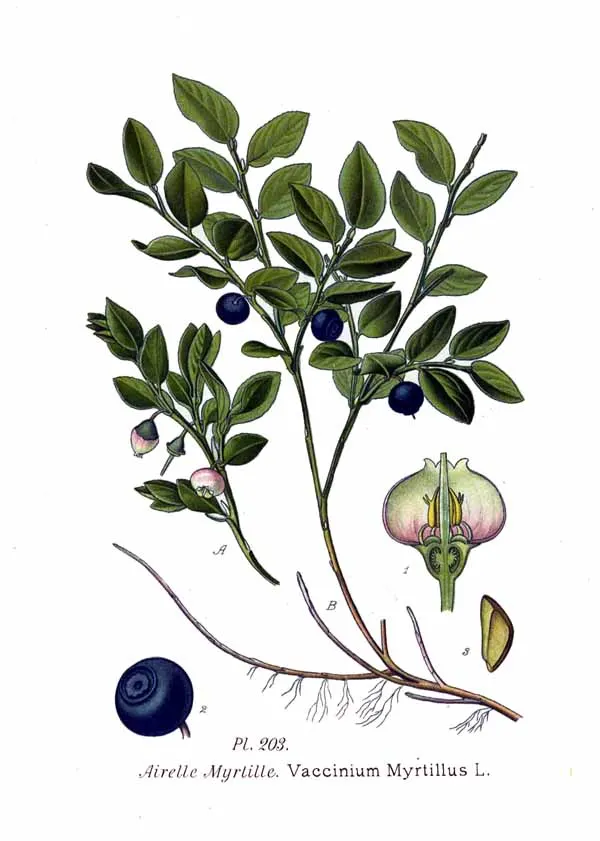
Photo: Amédée Masclef, Public domain (via Wikimedia Commons)
Bilberry
Vaccinium myrtillus
Also known as European Blueberry, Whortleberry, Blaeberry, Fraughan
Key benefits
✦Traditional uses
✦Bilberry has been gathered from European hillsides and hedgerows for centuries, its juice so deeply pigmented that foragers finish a harvest with stained hands and lips. Folk herbalists dried the ripe berries and simmered them into a thick decoction for digestive upset, especially mild diarrhea, a use later borne out by the fruit's natural tannins. Across Scandinavia, the Alps, and the British Isles, bilberry jam and cordial were kitchen staples long before the berry was studied for its role in circulation and eye comfort. It has also traditionally been used to support the small blood vessels of the eyes and legs, a use tied closely to its deep anthocyanin color.
Growing guide
✦Fresh to dried
✦Traditional preparations
✦Dried Bilberry Decoction
A traditional preparation reached for during occasional mild digestive upset or looseness of the stool.
How it's made. Lightly crush 1 to 2 teaspoons of dried bilberries and simmer in 250 ml of water for 10 to 15 minutes. Strain and drink, up to two or three times a day as needed.
Bilberry Syrup
A simple sweetened preparation used traditionally as a soothing, antioxidant-rich tonic and a way to preserve the berry's benefits beyond harvest season.
How it's made. Simmer 1 cup of fresh or dried bilberries in 1 cup of water until softened, strain, and stir the warm liquid with an equal part honey. Take by the spoonful.
- ✦Hawthorn
- ✦Eyebright
- ✦Rosehip
- ✦Elderberry
- ✦American Blueberry (Vaccinium corymbosum)
“For the deep-violet hedgerow berry that folk herbalists trusted, season after season, to steady the gut and support tired eyes and hardworking circulation.”
During World War II, British Royal Air Force pilots claimed that eating bilberry jam sharpened their night vision before flights, a story many historians now believe was wartime cover for the newly developed radar technology.
Bilberry fruit is safe as food, though it may lower blood sugar and affect platelet function, so use caution alongside diabetes medication or blood thinners like warfarin or aspirin. The leaves, taken in large amounts or long term, have been linked to toxicity and are best avoided as a regular tea.