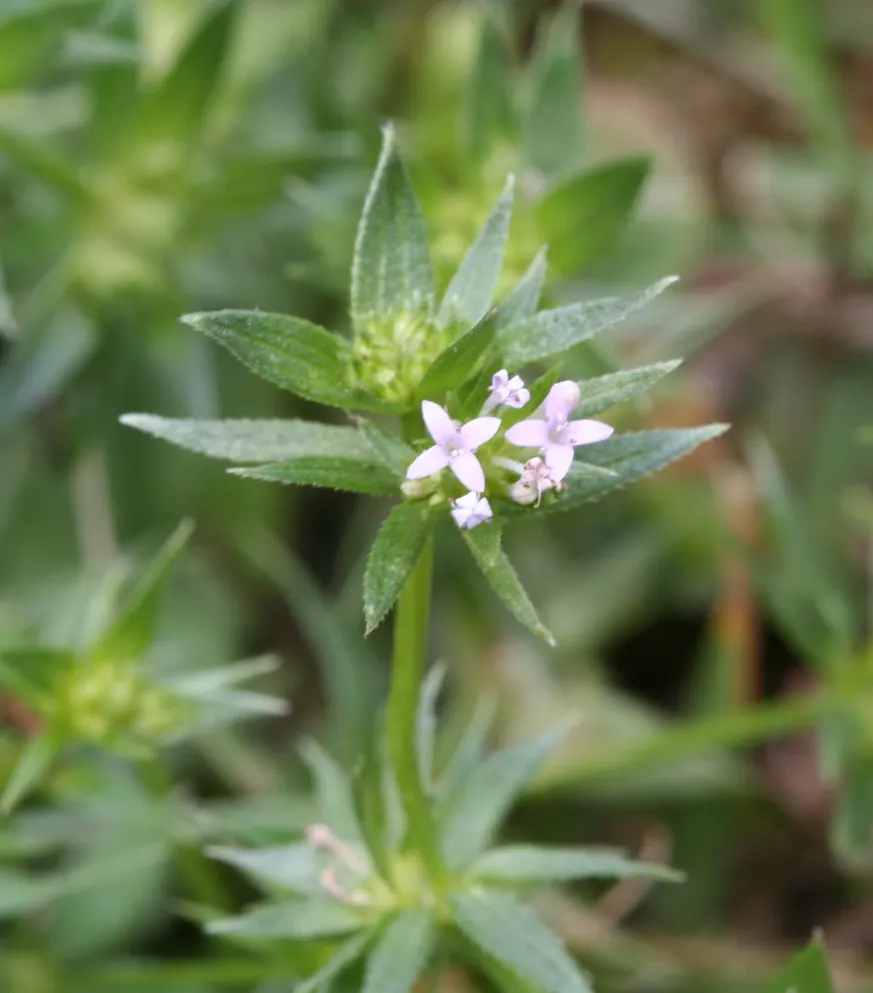
Photo: CC BY-SA 3.0 (via Wikimedia Commons)
Field Madder
Sherardia arvensis
Also known as Blue Field Madder, Spurwort, Sherard's Madder
Key benefits
✦Traditional uses
✦Field madder is a small, humble cousin of the great dye and medicine plants of the madder family, standing in the shadow of true madder, Rubia tinctorum, and the beloved cleavers, Galium aparine. It grows low and unassuming along field edges and garden paths, its whorled leaves and pinprick lilac flowers easy to walk right past. Old-world naturalists and herbalists took note of it mostly as a botanical curiosity and a marker of well-worked soil, rather than as a plant with a remedy of its own. It never earned the dye vats or the apothecary shelf that its relatives did, so its story is really a footnote to the wider madder family's long, colorful history.
How to grow & use it
✦The full apothecary for Field Madder
Traditional remedies and step-by-step preparations, a complete growing guide, and how to harvest, dry, and store it, all unlocked with HerbLens Unlimited.
- ✦Remedies & preparations
- ✦ Growing guide
- ✦Harvest & storage
From under $6 a month. Free plant identifications always included.
- ✦Cleavers (Galium aparine)
- ✦Scarlet pimpernel
- ✦Speedwell
- ✦Cleavers (Galium aparine), for those seeking the family's traditional herbal uses
- ✦True madder (Rubia tinctorum), for dye work
“For the quiet thrill of noticing a whole tiny world of lilac stars underfoot in a field you thought you knew.”
The genus name Sherardia honors James Sherard, an eighteenth-century English apothecary and amateur botanist who helped fund one of Europe's great botanical gardens, yet the little weed that carries his name never made it into the apothecary's own remedies.
Field madder is not known to be toxic, but it has no established tradition of medicinal use, so no preparation or dosage is recommended here.