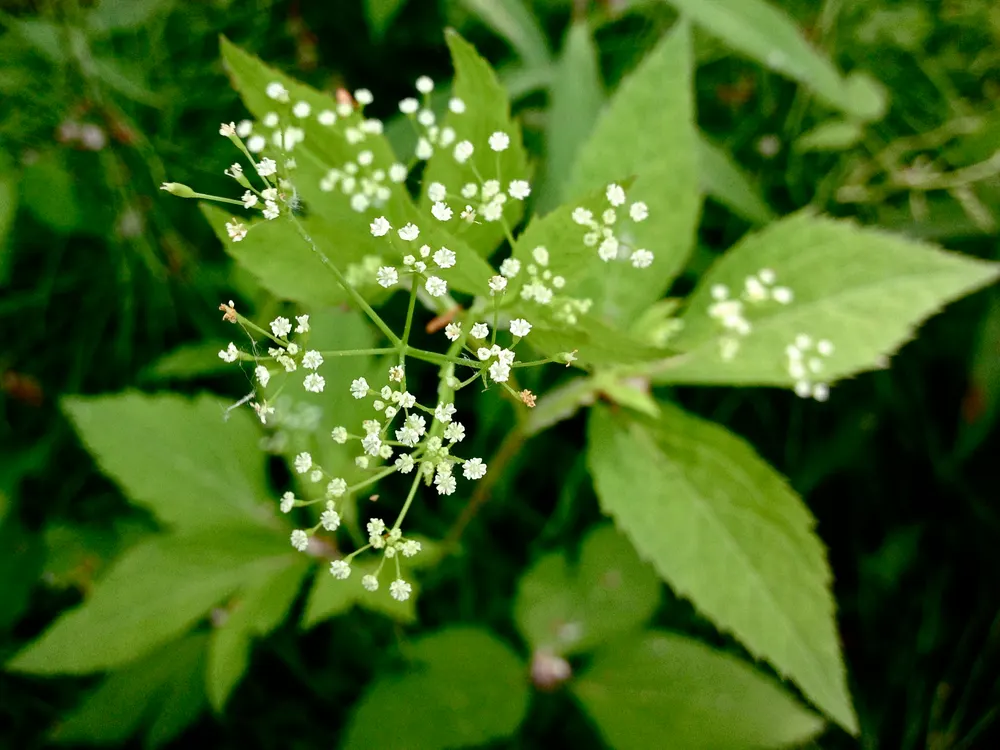
Photo: Fritzflohrreynolds, CC BY-SA 3.0 (via Wikimedia Commons)
Honewort
Cryptotaenia canadensis
Also known as Canadian Honewort, Wild Chervil, American Chervil, Wood Chervil
Key benefits
✦Traditional uses
✦Long before it had a place in kitchen gardens, honewort grew quietly in the shaded understory of eastern forests, where Native peoples including the Iroquois gathered it both as food and as medicine. Root infusions were traditionally taken for stomach upset, while washes made from the plant were used on skin troubles and minor wounds. It shares a lineage with mitsuba, the beloved Japanese herb, and in that sense honewort has been feeding and tending people on two continents for generations, even if few cooks today know its name.
How to grow & use it
✦The full apothecary for Honewort
Traditional remedies and step-by-step preparations, a complete growing guide, and how to harvest, dry, and store it, all unlocked with HerbLens Unlimited.
- ✦Remedies & preparations
- ✦ Growing guide
- ✦Harvest & storage
From under $6 a month. Free plant identifications always included.
- ✦Parsley
- ✦Chervil
- ✦Cilantro
- ✦Japanese mitsuba
- ✦Italian flat-leaf parsley
“For a gentle wild green with a whisper of parsley and celery, gathered from the cool, shaded floor of the forest.”
Honewort's close cousin across the Pacific, mitsuba (Cryptotaenia japonica), is such a fixture in Japanese kitchens that it shows up in sukiyaki and clear soups everywhere, and some botanists consider it little more than an Asian form of the very same species that grows wild in North American woods.
Honewort belongs to the carrot family, which includes deadly plants like poison hemlock and water hemlock, so never gather or eat it without expert identification. Those allergic to carrots or celery should also use caution.