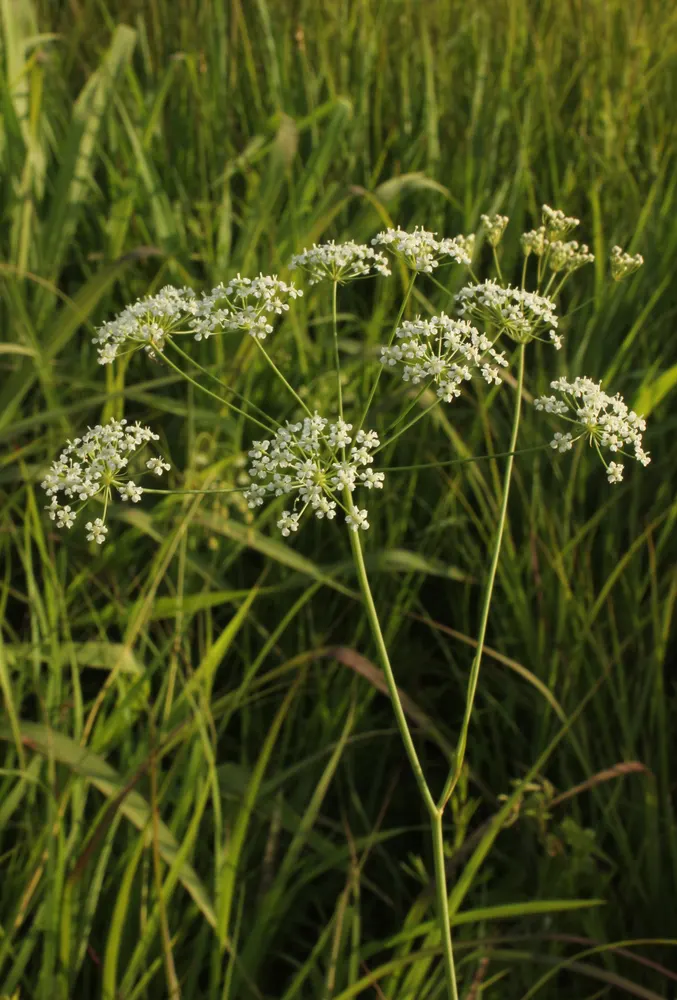
Photo: Scuttle17, CC BY-SA 4.0 (via Wikimedia Commons)
Eastern Yampah
Perideridia americana
Also known as Eastern Yampah, American Squawroot, Thicket Parsnip
Key benefits
✦Traditional uses
✦Perideridia americana, the eastern yampah, belongs to a genus whose small, carrot-like roots fed prairie peoples across North America for generations. Farther west, related yampah species were so central to Native diets that early explorers, including members of the Lewis and Clark expedition, recorded them as a staple root crop, dug in autumn and eaten raw, roasted, or dried for winter stores. The eastern species is less documented in the historical record, but it shares the same slender, aromatic taproot and the same quiet place in tallgrass prairie foodways. Because yampah roots so closely resemble those of deadly relatives in the carrot family, they were traditionally gathered only by those carrying generations of careful plant knowledge, passed hand to hand rather than written down.
How to grow & use it
✦The full apothecary for Eastern Yampah
Traditional remedies and step-by-step preparations, a complete growing guide, and how to harvest, dry, and store it, all unlocked with HerbLens Unlimited.
- ✦Remedies & preparations
- ✦ Growing guide
- ✦Harvest & storage
From under $6 a month. Free plant identifications always included.
- ✦Wild onion
- ✦Prairie clover
- ✦Cultivated parsnip
- ✦Cultivated carrot
“For the quiet botanist tracing the buried, ivory-rooted history of the American tallgrass prairie.”
The yampah roots that fed generations of prairie foragers are, ounce for ounce, nearly identical in appearance to the roots of water hemlock, one of North America's deadliest plants, which is why skilled identification of this humble little carrot relative has always been treated as a matter of life and death.
This carrot-family plant grows alongside two of North America's deadliest plants, water hemlock and poison hemlock, which look nearly identical to the untrained eye and have caused fatal poisonings through misidentification. It has no established history of medicinal use, so only forage it, if at all, after positive identification by an experienced botanist.