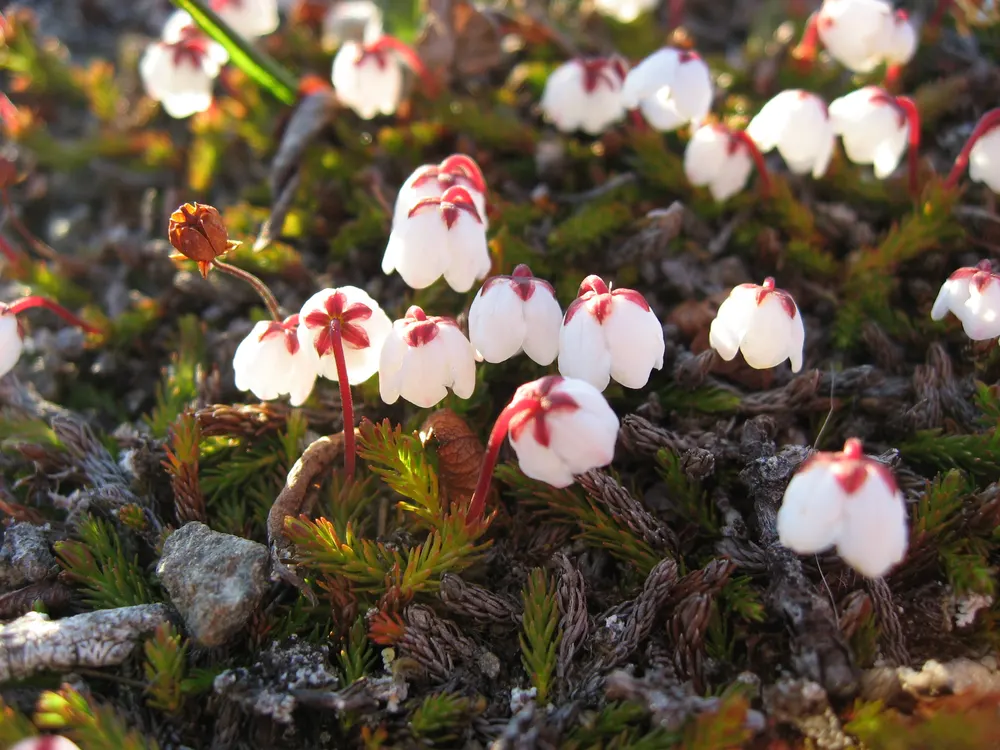
Photo: Kim Hansen, CC BY-SA 4.0 (via Wikimedia Commons)
Moss Heather
Harrimanella hypnoides
Also known as Moss Bell-heather, Clubmoss Mountain-heath, Cassiope hypnoides (synonym), Cassiope hypnoides
Key benefits
✦Traditional uses
✦Harrimanella hypnoides is not a plant with a documented history in the herbal or kitchen traditions most field guides celebrate. It grows in some of the coldest, wettest, most out-of-the-way corners of the world, tucked into snowbeds that only open up for a few short weeks each summer, so it simply never crossed paths with the herbalists and cooks whose knowledge fills books like this one. Its real legacy is ecological rather than medicinal: botanists have long used its presence as a quiet signal that a mountainside or tundra slope has stayed wild and undisturbed. Alpine gardeners who manage to coax it into a trough or scree bed prize it purely for its moss-soft beauty, not for any remedy it offers.
How to grow & use it
✦The full apothecary for Moss Heather
Traditional remedies and step-by-step preparations, a complete growing guide, and how to harvest, dry, and store it, all unlocked with HerbLens Unlimited.
- ✦Remedies & preparations
- ✦ Growing guide
- ✦Harvest & storage
From under $6 a month. Free plant identifications always included.
- ✦Cassiope tetragona (arctic bell-heather)
- ✦Dryas octopetala (mountain avens)
- ✦Loiseleuria procumbens (alpine azalea)
- ✦Cassiope tetragona for a similar moss-like alpine mat
- ✦Diapensia lapponica for comparably tough tundra groundcover
“For the hush of a snowbed just opened by the summer thaw, and the small, stubborn things that bloom there.”
The species name hypnoides means moss-like, a nod to how closely its tiny overlapping leaves resemble the Hypnum mosses it grows alongside, so much so that a resting patch is easy to walk right past thinking it is nothing more than an unusually tidy clump of moss.
There's no tradition of eating or brewing this plant and no safety data on it, so it should be admired in the wild rather than gathered for food or medicine.