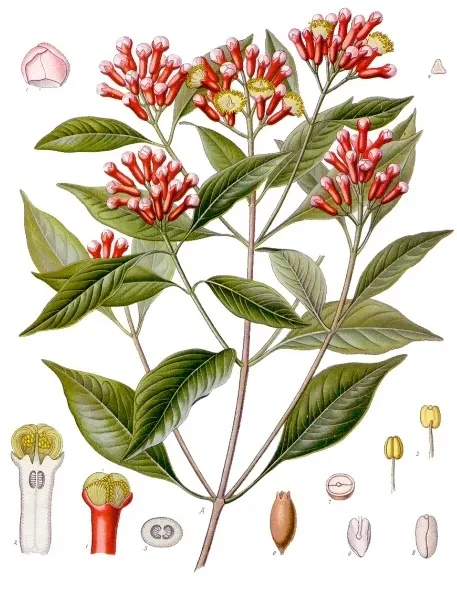
Photo: Franz Eugen Köhler, Köhler's Medizinal-Pflanzen, Public domain (via Wikimedia Commons)
Clove
Syzygium aromaticum
Also known as Clavo de olor, Laung, Ding Xiang
Key benefits
✦Traditional uses
✦Clove has perfumed kitchens and medicine chests for well over two thousand years, first traded out of the Maluku Islands of Indonesia, the so called Spice Islands, along routes that eventually reshaped world trade itself. Chinese court physicians as early as the Han dynasty required visitors to chew a clove bud before addressing the emperor, both as a courtesy and a breath freshener. Across Ayurvedic, Chinese, and European folk traditions alike, clove has traditionally been used to calm an aching tooth, settle a restless stomach, and warm the body during cold, damp seasons. Its heady, numbing quality made it a fixture of home dentistry long before modern anesthetics existed.
How to grow & use it
✦The full apothecary for Clove
Traditional remedies and step-by-step preparations, a complete growing guide, and how to harvest, dry, and store it, all unlocked with HerbLens Unlimited.
- ✦Remedies & preparations
- ✦ Growing guide
- ✦Harvest & storage
From under $6 a month. Free plant identifications always included.
- ✦Cinnamon
- ✦Ginger
- ✦Cardamom
- ✦Allspice
- ✦Cinnamon
“For the warm, dark spice that has soothed aching teeth and cold nights since before recorded history.”
In the 1600s, control of the clove trade was so lucrative that the Dutch East India Company razed clove trees on every island except one to maintain a monopoly, a single smuggled seedling later broke that hold entirely.
Undiluted clove oil is highly concentrated and can burn skin, gums, and mucous membranes, so it should never be used undiluted or taken internally. It also increases bleeding risk with blood thinners like warfarin and should be avoided before surgery and in medicinal amounts during pregnancy.