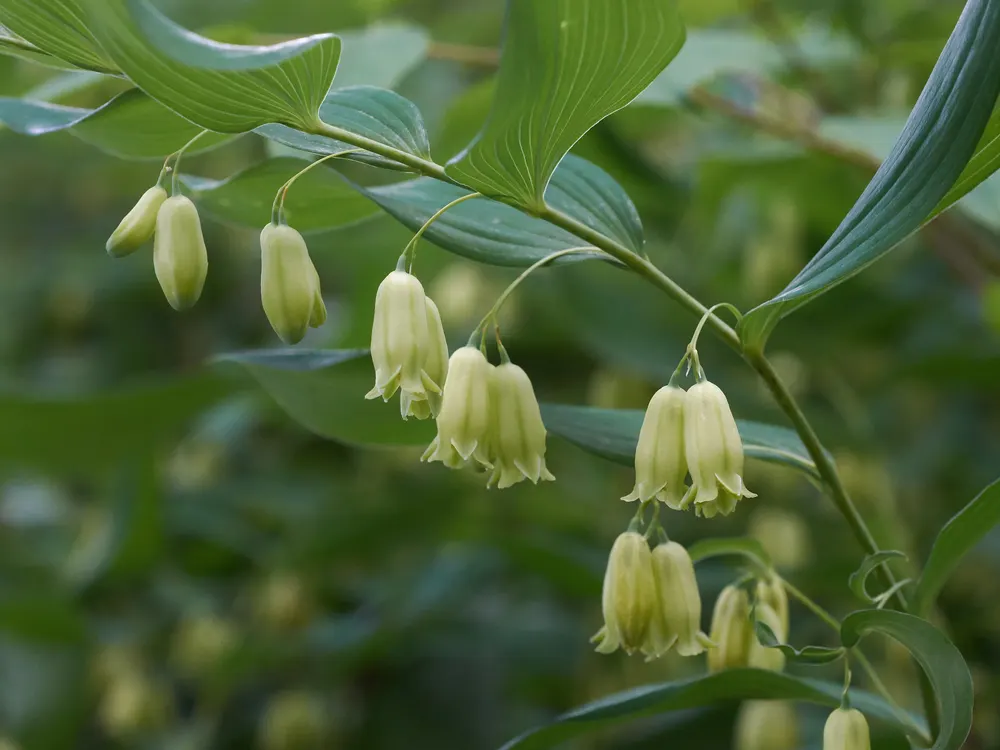
Photo: Eric Hunt, CC BY-SA 4.0 (via Wikimedia Commons)
Solomon's Seal
Polygonatum biflorum
Also known as Sealwort, True Solomon's Seal, King Solomon's Seal, Dropberry, Polygonatum commutatum
Key benefits
✦Traditional uses
✦Solomon's Seal has long been a quiet workhorse of the eastern woodland apothecary, its knobby rhizome dug in autumn and simmered into decoctions or mashed into poultices for bruises, sprains, and aching joints. Cherokee, Iroquois, and other Native American healers used root preparations for a wide range of complaints, including as a wash for wounds and a support for women's health, and early European settlers quickly adopted the plant under the old-world name Sealwort, applying it in much the same way their ancestors had used its Eurasian cousin. In lean seasons the starchy rhizome was also boiled and eaten like a root vegetable, and the young shoots were gathered in spring and cooked much like asparagus. It settled into folk medicine as a gentle, reliable helper for the everyday bumps and strains of rural life.
How to grow & use it
✦The full apothecary for Solomon's Seal
Traditional remedies and step-by-step preparations, a complete growing guide, and how to harvest, dry, and store it, all unlocked with HerbLens Unlimited.
- ✦Remedies & preparations
- ✦ Growing guide
- ✦Harvest & storage
From under $6 a month. Free plant identifications always included.
- ✦Comfrey
- ✦Arnica
- ✦Burdock root
- ✦Comfrey root
- ✦Black cohosh
“When old bruises and weary joints ask for the quiet mending of a woodland root.”
The plant earns its name from the round, seal-like scars left on the rhizome each year when the previous season's stem breaks away, marks that old herbalists thought resembled a wax seal and, by the doctrine of signatures, took as a sign the plant was meant to seal and mend wounds.
The berries are toxic and should never be eaten; only the rhizome is traditionally used. Before flowering, the leaves can be confused with true Lily of the Valley, which is dangerously toxic to the heart, so correct identification is essential.