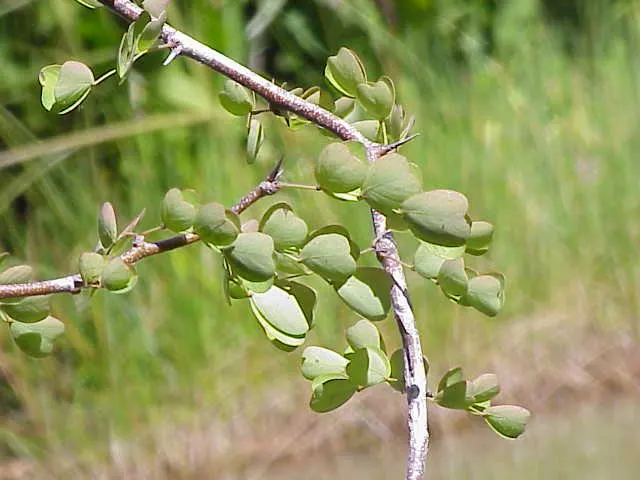
Photo: Kurt Stüber [1], CC BY-SA 3.0 (via Wikimedia Commons)
Logwood
Haematoxylum campechianum
Also known as Logwood tree, Bloodwood tree, Campeachy wood, Palo de tinte, Blackwood
Key benefits
✦Traditional uses
✦Long before it filled European dye vats, logwood's dense red heartwood was already valued by the Maya, who used decoctions of the chips as an astringent wash for wounds and a remedy for digestive upset. When Spanish and later British traders discovered how richly the wood colored cloth, it became one of the most fought-over commodities in the Caribbean, prized for producing deep blacks and purples on wool and silk. Folk healers throughout Mexico and Central America continued to brew the wood chips into a mild tea, traditionally taken in small amounts to settle a troubled stomach or gargled for a sore throat. Today the tree's fame rests mostly with science rather than the kitchen garden, since its extracted compound became the backbone of a stain used in medical laboratories around the world.
How to grow & use it
✦The full apothecary for Logwood
Traditional remedies and step-by-step preparations, a complete growing guide, and how to harvest, dry, and store it, all unlocked with HerbLens Unlimited.
- ✦Remedies & preparations
- ✦ Growing guide
- ✦Harvest & storage
From under $6 a month. Free plant identifications always included.
- ✦Ginger root
- ✦Cinnamon bark
- ✦Chamomile
- ✦Oak bark
- ✦Blackberry root
“For the old, wine-dark tonic steeped in a wood that once dyed the world's finest black cloth.”
The compound extracted from logwood's heartwood, hematoxylin, became the "H" in the H&E stain, the single most widely used stain in pathology labs today, so nearly every tissue biopsy ever examined under a microscope owes its color to this small, thorny tree from the Bay of Campeche.
The purified lab-grade hematoxylin extract used for staining should never be ingested or applied to skin. Traditional mild decoctions of the raw wood were taken only in small amounts for short periods, since larger doses can cause stomach upset, nausea, or a laxative effect.